






Your thyroid gland influences far more than simply metabolism and body weight.
Many people associate thyroid problems with weight gain, fatigue, hair loss, or struggling to lose weight, but what many don’t realize is that thyroid health and mental health are deeply connected. In fact, some people spend years chasing answers for depression, anxiety, low motivation, brain fog, chronic fatigue, or burnout without ever considering whether their thyroid may be contributing to the problem.
The reality is that your thyroid hormones help regulate nearly every cell in the body, including the cells inside your brain. Thyroid hormones influence energy production, metabolism, nervous system regulation, stress resilience, neurotransmitter production, body temperature, cognitive performance, hormonal communication, and blood sugar regulation. When thyroid function becomes compromised, these systems rarely become affected independently. Instead, they begin influencing each other, creating symptoms that can feel frustratingly complex.
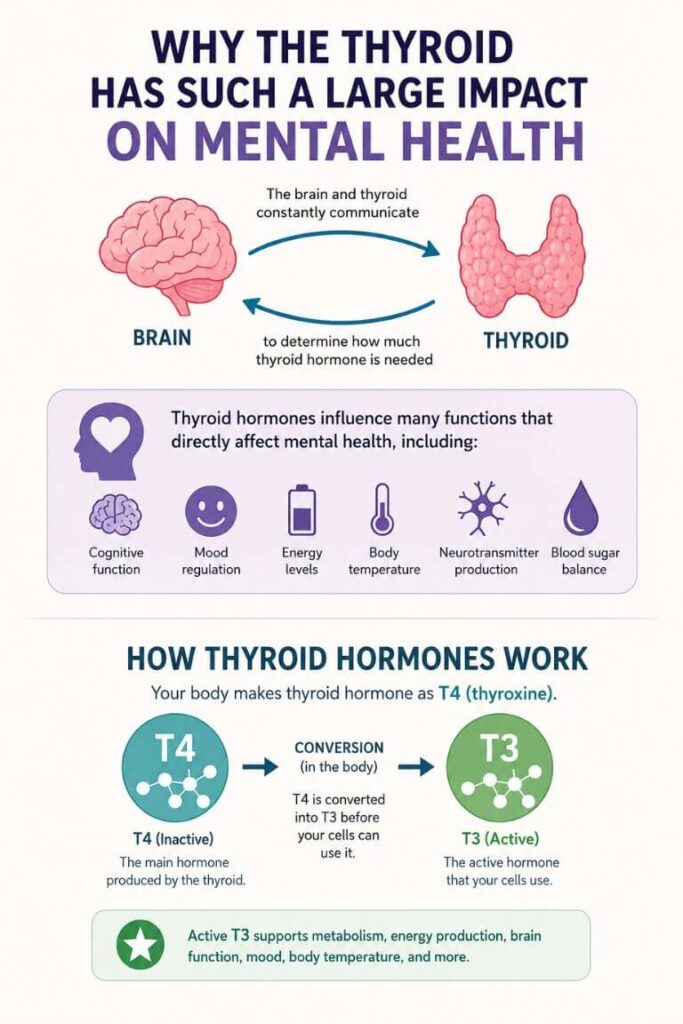
Why the thyroid has such a large impact on mental health
The thyroid operates through a communication network known as the hypothalamic-pituitary-thyroid axis, or HPT axis. This system constantly communicates between the brain and thyroid gland to determine how much thyroid hormone should be produced, activated, and utilized.
The challenge is that this system does not work alone.
Your thyroid works closely alongside another important system called the hypothalamic-pituitary-adrenal axis, or HPA axis, which regulates your stress response. This relationship is one reason stress and thyroid dysfunction frequently appear together.
How thyroid hormones work
Your body primarily produces thyroid hormone in the form of T4, also called thyroxine. T4 itself is largely inactive and must be converted into T3 before your cells can actually use it.
Active T3 influences metabolism, cellular energy production, cognitive function, body temperature regulation, neurotransmitter production, mood regulation, and blood sugar utilization.
When this conversion process becomes impaired, symptoms begin appearing throughout the body.
Why stress can interfere with thyroid hormone conversion
One of the most overlooked aspects of thyroid health is understanding what stress actually does to thyroid hormone conversion.
During periods of chronic stress, the body releases stress hormones including cortisol and epinephrine. When these hormones remain elevated for extended periods, your body may begin converting T4 away from active T3 production and instead create Reverse T3.
This is not necessarily a mistake.
From a survival perspective, slowing metabolism during periods of perceived danger helps conserve energy and resources. Historically this may have protected us during famine, illness, trauma, or periods of extreme environmental stress.
The problem is that modern stress rarely switches off.
Financial pressure, poor sleep, trauma, relationship stress, inflammation, blood sugar instability, environmental toxins, chronic dieting, and overtraining may all signal to the body that resources should be conserved.
Over time this can create a vicious cycle where stress lowers thyroid conversion, reduced thyroid function lowers resilience, lower resilience increases stress perception, and the cycle continues.
Many people describe this as feeling like they are “running on empty.”
How gut health and liver function affect thyroid hormones
One of the biggest misconceptions surrounding thyroid dysfunction is believing that the thyroid gland works independently.
The reality is that thyroid health depends heavily on multiple organ systems functioning efficiently.
Large amounts of T4 to T3 conversion occur within the liver. If the liver becomes overloaded from inflammation, alcohol intake, medications, environmental exposures, poor nutrition, or chronic stress, thyroid conversion efficiency may decline.
The gut plays an equally important role.
The gut microbiome influences thyroid hormone metabolism while simultaneously influencing neurotransmitter production. Many neurotransmitters involved in mental health, including serotonin, dopamine, and GABA, are heavily influenced by gut function.
This means poor gut health may simultaneously contribute to impaired thyroid conversion and poor mood.
The kidneys and adrenal system also contribute.
Chronic activation of stress hormones places greater demands on these systems which may contribute to inflammation, impaired resilience, reduced energy production, and worsening thyroid function.
This interconnected relationship explains why thyroid dysfunction rarely presents as a single symptom.
Instead, people frequently experience multiple symptoms simultaneously including fatigue, poor sleep, anxiety, weight gain, digestive symptoms, hormonal symptoms, low mood, and reduced stress tolerance.
How thyroid health affects hormones too
The thyroid does not operate separately from reproductive hormones.
Estrogen, progesterone, testosterone, insulin, and cortisol all influence thyroid hormone production and activity.
This relationship helps explain why many people experience worsening symptoms during perimenopause, menopause, pregnancy, postpartum periods, PCOS, or periods of significant stress.
Many people assume these symptoms are simply hormonal but often the picture is far more complex.
Hormones communicate continuously and dysfunction within one system frequently influences the others.
Why some people still feel unwell after starting thyroid medication
One of the most frustrating experiences for many people is beginning thyroid medication and expecting symptoms to disappear, only to discover they still feel exhausted, foggy, anxious, or unmotivated.
Many thyroid medications primarily provide T4.
However, providing T4 does not automatically guarantee conversion into active T3.
If conversion remains impaired due to chronic stress, inflammation, nutrient deficiencies, gut dysfunction, liver burden, poor sleep, or environmental exposures, symptoms may continue despite treatment.
This is why supporting thyroid health often requires looking beyond hormone replacement alone.
Supporting healthy thyroid function
If you’ve been struggling with fatigue, brain fog, low mood, anxiety, poor concentration, or other symptoms commonly associated with thyroid dysfunction, it’s important to remember that the thyroid doesn’t work in isolation.
Supporting thyroid health often requires supporting the entire network of systems that influence hormone production, hormone conversion, energy production, stress resilience, and brain function. The following supplements may help support some of the most common areas involved in thyroid health and mental wellbeing.
Support healthy iodine levels with Acceleradine®
Iodine is the foundation of thyroid hormone production. Without adequate iodine, the thyroid cannot efficiently produce the hormones responsible for energy production, metabolism, cognitive function, and mood regulation.
Acceleradine® is a practitioner-preferred iodine that provides highly bioavailable iodine designed to support healthy thyroid hormone production and whole-body cellular function, making it an ideal foundation for any thyroid support protocol.
Support healthy thyroid function with Accelerated Thyroid®
Healthy thyroid function relies on more than simply producing hormones. The body must also effectively regulate, activate, and utilize those hormones. Accelerated Thyroid® combines glandular support, herbs, nutrients, and proprietary scalar technology designed to support healthy thyroid function, energy production, metabolism, and overall endocrine balance.
Accelerated Liver Care®
Healthy thyroid function depends on more than just the thyroid gland. A large portion of the conversion of inactive T4 into active T3 occurs in the liver. When liver function is compromised, thyroid hormone activation may become less efficient, impacting energy, metabolism, mood, and mental clarity.
Accelerated Liver Care® supports healthy liver function, detoxification pathways, and bile flow, helping to create the foundation needed for optimal thyroid hormone conversion and cellular energy production.
Lifestyle factors to support better thyroid health
While supplements play an important role in supporting thyroid health, they should never replace the foundations that allow the thyroid to function properly in the first place.
The thyroid does not operate in isolation. It responds continuously to signals from the brain, stress hormones, blood sugar levels, nutrient status, inflammation, liver function, gut health, sleep quality, and environmental exposures. This is one reason why many people continue to experience symptoms despite taking medication or supplements. If the underlying stressors remain unchanged, the body may continue struggling to produce, convert, and utilize thyroid hormones efficiently.
The good news is that many of the factors that influence thyroid health are within our control.
Prioritize quality sleep
Sleep is one of the most important yet overlooked aspects of thyroid health. During sleep, the body repairs tissues, regulates hormones, supports detoxification pathways, and resets many of the systems involved in energy production and stress regulation.
Poor sleep may contribute to elevated cortisol levels, increased inflammation, blood sugar instability, and impaired thyroid hormone conversion. Over time, even mild sleep deprivation can affect mood, cognitive performance, resilience to stress, and overall thyroid function.
Aim for seven to nine hours of quality sleep each night and prioritize a consistent sleep schedule whenever possible.
Reduce chronic stress
Chronic stress is one of the most common drivers of thyroid dysfunction.
As discussed earlier, elevated stress hormones can interfere with the conversion of T4 into active T3 while increasing the production of Reverse T3. This may slow metabolism and contribute to symptoms such as fatigue, brain fog, low mood, anxiety, and reduced motivation.
While eliminating stress completely is impossible, finding ways to regulate your stress response can make a significant difference. Activities such as walking, resistance training, prayer, meditation, spending time in nature, breathwork, and meaningful social connection may help support a healthier stress response.
Support blood sugar stability
Blood sugar fluctuations place additional stress on the body and may contribute to increased cortisol production. Frequent spikes and crashes in blood sugar can leave people feeling tired, irritable, anxious, hungry, and mentally foggy throughout the day.
Building meals around quality protein, healthy fats, fiber-rich vegetables, and minimally processed carbohydrates may help support more stable energy levels and a healthier hormonal environment.
Support gut and liver health
Healthy thyroid function depends heavily on both the gut and the liver.
The liver is responsible for much of the conversion of T4 into active T3, while the gut microbiome influences thyroid hormone metabolism and neurotransmitter production. Supporting these organs through a nutrient-dense diet, adequate hydration, regular movement, and minimizing excessive alcohol consumption may help support healthy thyroid function over time.
Focus on nutrient-dense foods
The thyroid relies on a variety of nutrients to function optimally, including iodine, selenium, zinc, iron, magnesium, and B vitamins.
A diet rich in quality proteins, seafood, eggs, vegetables, fruits, healthy fats, and minimally processed foods helps provide many of the nutrients required for healthy hormone production and energy metabolism.
Limit alcohol intake
Alcohol can interfere with hormone regulation, place additional burden on the liver, contribute to inflammation, and negatively impact sleep quality. For individuals struggling with thyroid dysfunction, reducing alcohol intake may help support both thyroid health and overall wellbeing.
Small, consistent improvements in these lifestyle factors often have a far greater impact than people realize. When combined with targeted nutritional support, they help create an environment where the thyroid and the rest of the endocrine system can function more effectively.
Final thoughts
Your thyroid influences far more than body weight, metabolism, or how much energy you have at the end of the day. Thyroid hormones help regulate how efficiently your brain produces and uses neurotransmitters, how resilient you are to stress, how effectively hormones communicate throughout the body, and how well your cells generate the energy needed to support both physical and mental performance.
This is one reason thyroid dysfunction can be so difficult to recognize. Symptoms often appear in multiple systems at the same time and may be mistaken for anxiety, depression, burnout, hormonal imbalance, chronic stress, or simply getting older. In reality, many of these symptoms may be connected through the complex relationship between thyroid hormones, stress hormones, neurotransmitters, metabolism, and inflammation.
If you have been struggling with fatigue, mood changes, anxiety, depression, brain fog, poor concentration, hormonal symptoms, low motivation, or simply feel unlike yourself despite doing all the right things, your thyroid may deserve closer attention. While thyroid dysfunction is rarely the only factor involved, it is often an important piece of the puzzle that is overlooked.
The good news is that thyroid health can be supported. By addressing the lifestyle factors that influence thyroid function, supporting healthy hormone production and conversion, and taking a comprehensive approach to overall health, many people are able to improve not only their thyroid health but also their energy, mental clarity, resilience, and overall wellbeing.
Frequently Asked Questions
Frequently Asked Questions
Yes. Both hypothyroidism and hyperthyroidism have been associated with mood changes, anxiety, depression, cognitive dysfunction, irritability, poor concentration, fatigue, and altered stress resilience.
Stress hormones influence thyroid hormone conversion. Chronic elevations in cortisol may reduce active T3 production while increasing Reverse T3 production, potentially slowing metabolism and reducing cellular energy production.
Absolutely. Thyroid hormones interact closely with estrogen, progesterone, testosterone, insulin, and cortisol. Changes within one hormonal system frequently influence the others.
Blood tests provide only part of the picture. Conversion efficiency, inflammation, nutrient status, gut health, liver function, sleep quality, stress exposure, and hormonal interactions may all contribute to symptoms.

Sara Banta
Sara Banta is an NANP Certified Dietary Supplement Professional, Health Coach, and CEO & Founder of Accelerated Health Products. She is also the host of the top-rated podcast Accelerated Health with Sara Banta, where she shares practical strategies to support energy, metabolism, hormones, and overall wellness. Sara is passionate about helping people take control of their health naturally through education and innovative formulations.
- Sara Banta
- Sara Banta
- Sara Banta
- Sara Banta
- Sara Banta
- Sara Banta
- Sara Banta
- Sara Banta
- Sara Banta
- Sara Banta
- Sara Banta
- Sara Banta
- Sara Banta
- Sara Banta
- Sara Banta
- Sara Banta
- Sara Banta
- Sara Banta
- Sara Banta
- Sara Banta
- Sara Banta
- Sara Banta
- Sara Banta
- Sara Banta
- Sara Banta
- Sara Banta
- Sara Banta
- Sara Banta
- Sara Banta
- Sara Banta
- Sara Banta
- Sara Banta
- Sara Banta
- Sara Banta
- Sara Banta
- Sara Banta
- Sara Banta
- Sara Banta
- Sara Banta
- Sara Banta
- Sara Banta
- Sara Banta
- Sara Banta
- Sara Banta
- Sara Banta
- Sara Banta
- Sara Banta
- Sara Banta
- Sara Banta
- Sara Banta
- Sara Banta
- Sara Banta
- Sara Banta
- Sara Banta
- Sara Banta
- Sara Banta
- Sara Banta
- Sara Banta
- Sara Banta
- Sara Banta
- Sara Banta
- Sara Banta
- Sara Banta
- Sara Banta
- Sara Banta
- Sara Banta
- Sara Banta
- Sara Banta
- Sara Banta
- Sara Banta
- Sara Banta
- Sara Banta
- Sara Banta
- Sara Banta
- Sara Banta
- Sara Banta
- Sara Banta
- Sara Banta
- Sara Banta
- Sara Banta
- Sara Banta
- Sara Banta
- Sara Banta
- Sara Banta
- Sara Banta
- Sara Banta
- Sara Banta
- Sara Banta
- Sara Banta
- Sara Banta
- Sara Banta
- Sara Banta
- Sara Banta
- Sara Banta
- Sara Banta
- Sara Banta
- Sara Banta
- Sara Banta
- Sara Banta
- Sara Banta
- Sara Banta
- Sara Banta
- Sara Banta
- Sara Banta
- Sara Banta
- Sara Banta
- Sara Banta
- Sara Banta
- Sara Banta
- Sara Banta
- Sara Banta
- Sara Banta
- Sara Banta
- Sara Banta
- Sara Banta
- Sara Banta
- Sara Banta
- Sara Banta
- Sara Banta
- Sara Banta
- Sara Banta
- Sara Banta
- Sara Banta
- Sara Banta
- Sara Banta
- Sara Banta
- Sara Banta
- Sara Banta
- Sara Banta
- Sara Banta
- Sara Banta
- Sara Banta
- Sara Banta
- Sara Banta
- Sara Banta
- Sara Banta
- Sara Banta
- Sara Banta
- Sara Banta
- Sara Banta
- Sara Banta
- Sara Banta
- Sara Banta
- Sara Banta
- Sara Banta
- Sara Banta
- Sara Banta
- Sara Banta
- Sara Banta
- Sara Banta
- Sara Banta
- Sara Banta
- Sara Banta
- Sara Banta
- Sara Banta
- Sara Banta
- Sara Banta
- Sara Banta
- Sara Banta
- Sara Banta
- Sara Banta
- Sara Banta
- Sara Banta
- Sara Banta
- Sara Banta
- Sara Banta
- Sara Banta
- Sara Banta
- Sara Banta
- Sara Banta
- Sara Banta
- Sara Banta
- Sara Banta
- Sara Banta
- Sara Banta
- Sara Banta
- Sara Banta
- Sara Banta
- Sara Banta
- Sara Banta
- Sara Banta
- Sara Banta
- Sara Banta
- Sara Banta
- Sara Banta
- Sara Banta
- Sara Banta
- Sara Banta
- Sara Banta
- Sara Banta
- Sara Banta
- Sara Banta
- Sara Banta
- Sara Banta
- Sara Banta
- Sara Banta
- Sara Banta
- Sara Banta
- Sara Banta
- Sara Banta
- Sara Banta
- Sara Banta
- Sara Banta
- Sara Banta
- Sara Banta
- Sara Banta
- Sara Banta
- Sara Banta
- Sara Banta
- Sara Banta
- Sara Banta
- Sara Banta
- Sara Banta
- Sara Banta
- Sara Banta
- Sara Banta
- Sara Banta
- Sara Banta
- Sara Banta
- Sara Banta
- Sara Banta