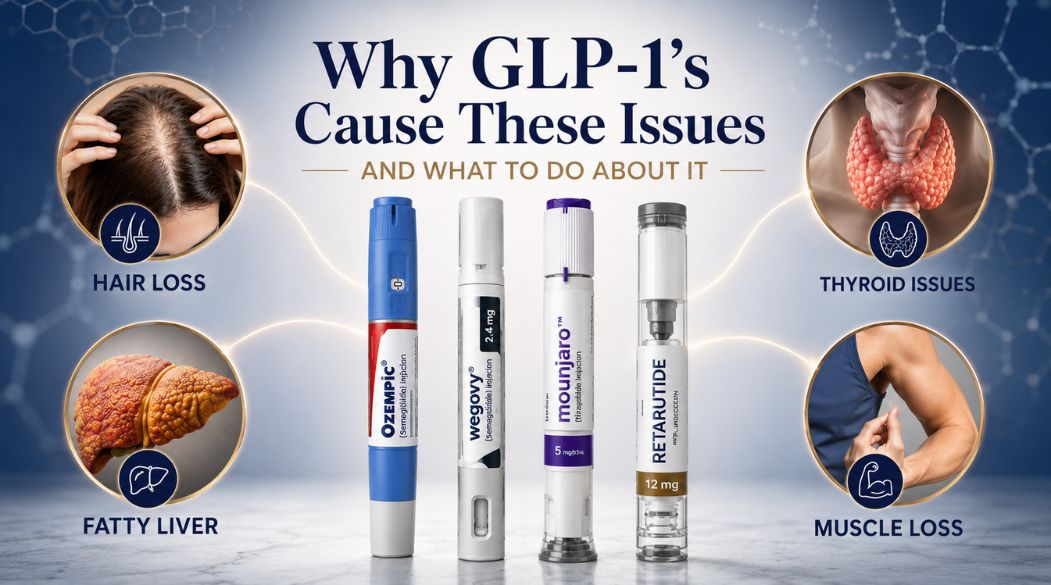
What if the weight you’re losing on that GLP-1 isn’t just fat?
The constant hunger is gone. The food noise is quiet. The scale is finally moving. Hooray! But underneath all of that, you’re having GLP-1 issues. You are losing muscle, experiencing hair loss, losing energy and have “ozempic face”
Here’s the thing nobody tells you. GLP-1 medications can quiet the appetite, but they don’t rebuild your metabolism.
This article breaks down the nutrients your body actually needs while you’re on a GLP-1 — for your muscle, your thyroid, your liver, your metabolism — so you lose fat, keep your strength, and the weight loss actually stays once you’re done.
Let’s talk about GLPs
You’re reaching for them. You’re desperate. And I get it.
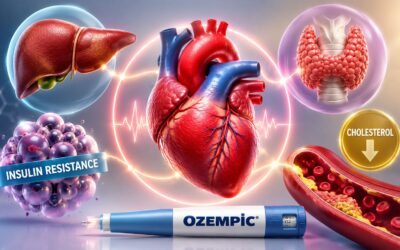
GLP stands for glucagon-like peptide. When we talk about GLP-1s, that’s Ozempic, Zepbound, Mounjaro, Tirzepatide and now even Retatrutide. This applies to all of them, regardless of which one you’re using.
Am I against them? No, they have a place. Am I for them? I think there are better ways to go about it. But this is a conversation that needs to happen if you’ve chosen to use one.
These medications mimic the GLP hormone. They slow how fast your stomach empties. They change how your brain signals hunger and fullness. The result is that you feel full faster, you stay full longer, and the food noise quiets down. For someone who has fought cravings and emotional eating for years, that can feel like freedom.
But here’s the catch. Appetite suppression is not the same thing as metabolic healing.
A GLP-1 does not rebuild muscle. It doesn’t restore your thyroid function, which is probably the reason you got here in the first place. It doesn’t clear a congested liver (and most of you have some degree of fatty liver). It doesn’t open your detox pathways. It doesn’t replace your collagen. And it doesn’t correct your mineral deficiencies. It just turns down the volume on hunger.
When the weight drops fast without the right support underneath it, your body may lose far more than fat — muscle, collagen, minerals, hair, strength, and metabolic resilience. The goal was never to become a smaller, weaker version of yourself. The goal is to lose fat while protecting your muscle, your skin, your thyroid, your liver, your long-term metabolism, and yes, that hair and that face you love. You can’t have a plump face and a skinny, depleted body. The body doesn’t work that way. You have to address the foundation first.
The real problem isn’t the GLP-1 medication
Most people struggling with weight aren’t fighting a willpower problem. They’re carrying deeper metabolic stress — poor thyroid function, insulin resistance, fatty liver, low muscle mass, poor bile flow, sluggish detox pathways, mineral depletion, not enough protein, mitochondrial dysfunction, poor sleep, stress, inflammation, constipation, hormonal shifts. Your grandparents didn’t have less willpower than you. They just didn’t have obesity at this scale.
A GLP-1 doesn’t fix any of that on its own. In fact, it can make a lot of it worse. Someone can lose weight and still feel tired, cold, constipated, weak, foggy, puffy, metabolically stuck, even notice a lower libido. The scale goes down while the foundation stays weak. And a weak foundation is exactly why people regain weight so fast after stopping the medication — the appetite comes roaring back, but now the metabolism is slower because muscle (which burns calories) is gone. That’s the opposite of what anyone wants.
Why you are losing muscle on GLP-1 medication
Muscle isn’t just about how you look. Muscle is a metabolic organ. It helps you burn more energy at rest, stores glucose properly (which supports blood sugar and insulin sensitivity), protects your bones and joints, supports healthy aging, and keeps your metabolism resilient long term.
When muscle goes down, your metabolic rate goes down with it, and the research on how much muscle GLP-1 users actually lose is sobering. Estimates vary depending on the study and how “lean mass” is measured, but multiple GLP-1 body composition studies have found that roughly a quarter to nearly half of total weight lost on semaglutide or tirzepatide can come from lean tissue rather than fat, and clinical data on semaglutide has shown lean mass reductions equal to several pounds during treatment. Even newer research using more precise mouse models found meaningful loss in liver mass alongside a measurable drop in muscle strength, reinforcing that this isn’t just a headline exaggeration.
Here’s how muscle loss happens on GLP-1’s
You’re eating dramatically fewer calories, and you’re probably eating less protein too, because you’re nauseous, or you just don’t feel hungry. Your body still needs energy from somewhere, so it breaks down muscle and burns it for fuel. Even the protein you do eat may get burned for energy instead of repairing tissue, building hormones, and maintaining your muscle and hair. This is called a catabolic state — you’re not just burning fat, you’re burning through the tissue that keeps your metabolism working.
This is exactly why you shouldn’t just weigh yourself on a regular scale — you need a body composition scale. I love the Hume BodyPod, which shows you muscle versus fat by region of your body, along with your water and electrolyte balance, so you can actually see whether you’re losing fat, water, or muscle.
“Skinny fat” is one of the biggest mistakes
Celebrating the number on the scale without looking at body composition is how people end up “skinny fat” — smaller, but softer, weaker, less toned. Signs include soft arms, flat glutes, loose skin, low muscle tone, more cellulite, poor posture, fatigue, and a slower metabolism. And that means weight regain happens even faster if you don’t hold onto your muscle. Resistance training combined with adequate protein is consistently the single biggest lever for preventing this, regardless of which GLP-1 you’re on.
Why hair loss happens on GLP1’s
Hair loss is one of the most common complaints after rapid weight loss, and it makes sense once you understand the mechanism. Your body doesn’t care what you look like — it cares about protecting the organs that keep you alive.
Hair is the last thing on your body’s priority list, but it’s extremely sensitive to stress. You can lose hair from grief, financial stress, divorce, and from weight loss, because your body reads a sudden drop in calories as a sign of danger.
This isn’t just anecdotal anymore. It’s showing up in the clinical literature. A 2025 review in the Journal of the European Academy of Dermatology and Venereology found this hair shedding pattern associated specifically with the once-weekly GLP-1 agonists, and identified telogen effluvium — a stress-triggered shedding of hair follicles — as the most likely mechanism. Cleveland Clinic and other dermatology sources point to the same root cause — rapid weight loss, combined with drops in protein, iron, zinc, and vitamin D, pushes hair follicles into a resting phase all at once.
When your body senses a sudden drop in calories, protein, minerals, and thyroid output, it shifts resources away from the hair and toward survival — your liver, kidneys, heart. Your thyroid responds to that same stress by converting more of your active thyroid hormone (T4) into reverse T3, a kind of “hibernation” signal that tells the body to hold onto every calorie it can.
Minerals matter too. If your liver is congested, it can’t properly assimilate the nutrients your hair needs even if you’re eating them.
Hair loss isn’t a vanity issue. It’s a metabolic signal. Your body is asking for more raw materials, more thyroid support, more liver support, more metabolic stability.
“Ozempic face” — what’s really going on
This is the term for a face that looks hollow, saggy, tired, or aged after rapid weight loss. It’s not the medication attacking your face — it’s about what fast weight loss does to skin, collagen, facial fat, hydration, and connective tissue when it happens faster than the body is built to adapt to.
When collagen is already depleted and weight drops quickly, skin doesn’t have time to adjust. You’ll notice facial hollowing, sagging, deeper lines, thinner-looking skin, loss of plumpness, weaker hair and nails, and joint discomfort. A smaller body still needs structure.
Your thyroid — the piece GLPs completely ignore
You’re probably on a GLP-1 because your metabolism wasn’t cooperating — no matter how much you ate or exercised, the weight wouldn’t budge. That’s very often your thyroid.
Your thyroid drives body temperature, energy, digestion, mood, hair growth, and fat burning. If it’s sluggish, you’ll lose hair, get constipated, feel puffy, stay fatigued even after sleep, and struggle to burn fat. If your doctor says your thyroid is “normal” but you’re still cold, take your temperature first thing in the morning. If it’s not around 98°F, ask for a full thyroid panel that includes free T3 (your fat-burning hormone) and reverse T3 (your stress/survival signal).
Low-calorie eating reads as stress to your body. And if you’re already undernourished, mineral-deficient, or liver-congested, cutting calories further on a GLP-1 can slow your thyroid down even more. Your thyroid still needs iodine, amino acids, minerals, liver support, and healthy cellular energy every single day, regardless of how few calories you’re eating.
Iodine deficiency is a much bigger issue than most people realize. National nutrition survey data has shown iodine intake inadequacy in the U.S. has been rising for years, and other analyses have put a meaningful share of the population in iodine-deficient territory. Without iodine, your thyroid physically cannot build the fat-burning hormone free T3 — the “3” in T3 literally refers to three molecules of iodine. No iodine, no building block, no functioning thyroid hormone.
To make it worse, modern exposure to fluoride, bromine, and chlorine competes with iodine for the same receptor sites in your body, which is part of why iodine deficiency has quietly become so widespread even in developed countries with historically iodine-fortified diets.
Fatty liver and insulin resistance — the piece no one’s talking about
Your liver handles blood sugar regulation, fat metabolism, bile production, hormone metabolism, detoxification, and cholesterol balance. It’s the cornerstone of your health. Over a third of U.S. adults are now estimated to have some form of non-alcoholic fatty liver disease, and the rest of us have livers working harder than they did a decade ago thanks to our environment.
Here’s the catch on a GLP-1. You’d assume that losing weight automatically improves a fatty, congested liver. Not always. As fat cells shrink, the toxins and endocrine disruptors stored inside them get released into your bloodstream, and your liver has to process all of that at an accelerated rate because you’re losing fat at an accelerated rate. If your bile flow is sluggish or your bowels are backed up (extremely common on a GLP-1, since these drugs slow gastric motility), those toxins recirculate instead of leaving the body, and you end up feeling worse, not better.
Fat loss isn’t just about burning fat. It’s about processing what the fat loss releases. If your detox pathways — liver, bile, bowels, kidneys, lymph, skin — are sluggish, your body will actually resist releasing more fat, because it’s protecting itself. That shows up as a plateau, bloating, fatigue, skin issues, headaches, and constipation.
The Supplements That Actually Support Your Body on a GLP-1
If you’re one of my loved ones, you know I don’t let you get on a GLP-1 unless you’re doing these supplements alongside it. This is the foundation-rebuilding piece that the medication was never designed to cover.
Accelerated AMINOS® — for muscle preservation
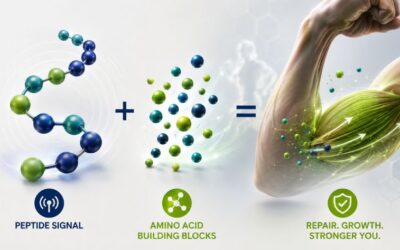
When appetite drops, protein intake drops with it, and muscle, skin, hair, collagen, and hormones all pay the price. Accelerated AMINOS® delivers 9 essential amino acids — what protein is actually made of — in a form that’s easy to absorb even when appetite is low (five tablets equals 25-30 grams of protein). On a GLP-1 or any calorie-restricted diet, you actually need more protein than usual. I aim for about one gram per pound of body weight.
The key ingredient is HMB, a metabolite of the amino acid leucine that’s directly tied to muscle protein synthesis. It helps your body hold onto lean muscle while fat comes off, which is how it’s possible to lose weight and gain muscle at the same time. There are also ingredients that increase ATP and cellular energy, so you actually have the energy to strength train, which, along with adequate protein, is one of the most effective ways to protect lean mass during rapid weight loss.
Accelerated Bio Peptides™ — for skin, joints, and collagen
Accelerated Bio Peptides™ is an oral (not injectable) delivery system that supports the structural side of your body during weight loss — skin, joints, fascia, tendons, ligaments, gut lining, blood vessels, hair, and nails. It pairs well with Accelerated AMINOS®. It’s also anti-inflammatory and antihistamine, which matters because a lot of GLP-1 users deal with a histamine response — welts, rashes, bloating, constipation. One ingredient supports gut healing (so you absorb more of the nutrients you are eating), and another, Astreon, is a patented ingredient studied for targeting senescent (“zombie”) cells associated with aging.
Acceleradine® Iodine — for thyroid raw material
Iodine is the literal building block your thyroid needs to make active thyroid hormone. Acceleradine® iodine supports healthy thyroid hormone production and the conversion of T4 to T3, increases cellular energy at the mitochondrial level, and supports the cell membrane’s ability to release fat and toxins while letting nutrients in. It also supports the detox pathways that clear heavy metals, chlorine, bromide, and fluoride, all of which compete with iodine in the body.
Accelerated Thyroid® — for metabolic rate and adrenal support
Accelerated Thyroid® supports thyroid function, metabolic rate, and adrenal balance, which matters because stress causes your adrenals to use up iodine and salt that your thyroid needs, slowing your metabolism further. This is especially helpful for GLP-1 users, since your body is running on fewer calories and needs deeper metabolic support to keep functioning normally.
Accelerated Liver Care® — for bile flow and detoxification
Liver support isn’t optional on a GLP-1. It’s mandatory. Accelerated Liver Care® supports liver function, bile flow, digestion, detoxification, hormone metabolism, and fat metabolism, which becomes especially important as fat loss releases stored toxins back into your bloodstream faster than usual.
Accelerated Cellular Detox® Powder — for regularity and toxin clearance
Since GLP-1s slow gastric motility (hello, constipation), this helps bind toxins, supports regularity, and calms inflammation in the gut, kidneys, and liver. Constipation isn’t just uncomfortable. It means you’re recirculating toxins instead of clearing them, which can stall your progress.
Accelerated Ancient Salt® — for hydration and electrolytes
Most people on a GLP-1 are dehydrated because they’re eating and drinking less overall. This provides the minerals and electrolytes your body needs daily, which becomes even more important with reduced food intake.
Food and lifestyle basics still matter
Even with the right supplements, food matters. A few non-negotiables
- Eat less, but eat better — skip the processed foods
- Prioritize wild animal protein and eat it first on your plate
- Get enough amino acids and clean fats to support hormones and bile flow
- Choose mineral-rich, easy-to-digest foods
- Hydrate deliberately, with electrolytes
- Lift weights or do resistance training, don’t crash diet
- Track your strength and body composition, not just the number on the scale
Frequently asked questions about GLP-1 side effects
You don’t have to do anything, but if you want to come off your GLP-1 with your muscle, hair, thyroid, and liver intact, rather than just smaller, I consider protein and amino acid support, iodine, and liver support to be the non-negotiables. Everything else depends on your specific symptoms.
A reasonable target is around one gram of protein per pound of body weight, prioritized at every meal, since appetite suppression naturally makes it harder to hit that number through food alone.
In most cases, no. It’s tied to a temporary shedding pattern called telogen effluvium, triggered by rapid weight loss and nutrient stress rather than the drug directly attacking the follicle. Supporting protein, minerals, thyroid function, and liver health is what helps it resolve faster.
Not necessarily. As fat cells shrink, stored toxins get released into your bloodstream faster than your liver may be able to process them, especially if bile flow or bowel regularity is already sluggish. Liver support matters just as much during weight loss as before it.
A body composition scale (I use the Hume BodyPod) that shows muscle versus fat by body region, plus tracking your strength in the gym, gives you a far more accurate picture than weight alone.
Yes. Everything here supports muscle, thyroid, liver, and metabolic health whether or not you’re using a GLP-1. The principles are the same for anyone in a calorie deficit or dealing with a sluggish metabolism.
This article is for educational purposes and is not a substitute for individualized medical advice. Talk to your healthcare provider about your specific situation, especially before starting or stopping any medication or supplement regimen.

Sara Banta
Sara Banta is an NANP Certified Dietary Supplement Professional, Health Coach, and CEO & Founder of Accelerated Health Products. She is also the host of the top-rated podcast Accelerated Health with Sara Banta, where she shares practical strategies to support energy, metabolism, hormones, and overall wellness. Sara is passionate about helping people take control of their health naturally through education and innovative formulations.
- Sara Banta
- Sara Banta
- Sara Banta
- Sara Banta
- Sara Banta
- Sara Banta
- Sara Banta
- Sara Banta
- Sara Banta
- Sara Banta
- Sara Banta
- Sara Banta
- Sara Banta
- Sara Banta
- Sara Banta
- Sara Banta
- Sara Banta
- Sara Banta
- Sara Banta
- Sara Banta
- Sara Banta
- Sara Banta
- Sara Banta
- Sara Banta
- Sara Banta
- Sara Banta
- Sara Banta
- Sara Banta
- Sara Banta
- Sara Banta
- Sara Banta
- Sara Banta
- Sara Banta
- Sara Banta
- Sara Banta
- Sara Banta
- Sara Banta
- Sara Banta
- Sara Banta
- Sara Banta
- Sara Banta
- Sara Banta
- Sara Banta
- Sara Banta
- Sara Banta
- Sara Banta
- Sara Banta
- Sara Banta
- Sara Banta
- Sara Banta
- Sara Banta
- Sara Banta
- Sara Banta
- Sara Banta
- Sara Banta
- Sara Banta
- Sara Banta
- Sara Banta
- Sara Banta
- Sara Banta
- Sara Banta
- Sara Banta
- Sara Banta
- Sara Banta
- Sara Banta
- Sara Banta
- Sara Banta
- Sara Banta
- Sara Banta
- Sara Banta
- Sara Banta
- Sara Banta
- Sara Banta
- Sara Banta
- Sara Banta
- Sara Banta
- Sara Banta
- Sara Banta
- Sara Banta
- Sara Banta
- Sara Banta
- Sara Banta
- Sara Banta
- Sara Banta
- Sara Banta
- Sara Banta
- Sara Banta
- Sara Banta
- Sara Banta
- Sara Banta
- Sara Banta
- Sara Banta
- Sara Banta
- Sara Banta
- Sara Banta
- Sara Banta
- Sara Banta
- Sara Banta
- Sara Banta
- Sara Banta
- Sara Banta
- Sara Banta
- Sara Banta
- Sara Banta
- Sara Banta
- Sara Banta
- Sara Banta
- Sara Banta
- Sara Banta
- Sara Banta
- Sara Banta
- Sara Banta
- Sara Banta
- Sara Banta
- Sara Banta
- Sara Banta
- Sara Banta
- Sara Banta
- Sara Banta
- Sara Banta
- Sara Banta
- Sara Banta
- Sara Banta
- Sara Banta
- Sara Banta
- Sara Banta
- Sara Banta
- Sara Banta
- Sara Banta
- Sara Banta
- Sara Banta
- Sara Banta
- Sara Banta
- Sara Banta
- Sara Banta
- Sara Banta
- Sara Banta
- Sara Banta
- Sara Banta
- Sara Banta
- Sara Banta
- Sara Banta
- Sara Banta
- Sara Banta
- Sara Banta
- Sara Banta
- Sara Banta
- Sara Banta
- Sara Banta
- Sara Banta
- Sara Banta
- Sara Banta
- Sara Banta
- Sara Banta
- Sara Banta
- Sara Banta
- Sara Banta
- Sara Banta
- Sara Banta
- Sara Banta
- Sara Banta
- Sara Banta
- Sara Banta
- Sara Banta
- Sara Banta
- Sara Banta
- Sara Banta
- Sara Banta
- Sara Banta
- Sara Banta
- Sara Banta
- Sara Banta
- Sara Banta
- Sara Banta
- Sara Banta
- Sara Banta
- Sara Banta
- Sara Banta
- Sara Banta
- Sara Banta
- Sara Banta
- Sara Banta
- Sara Banta
- Sara Banta
- Sara Banta
- Sara Banta
- Sara Banta
- Sara Banta
- Sara Banta
- Sara Banta
- Sara Banta
- Sara Banta
- Sara Banta
- Sara Banta
- Sara Banta
- Sara Banta
- Sara Banta
- Sara Banta
- Sara Banta
- Sara Banta
- Sara Banta
- Sara Banta
- Sara Banta
- Sara Banta
- Sara Banta
- Sara Banta
- Sara Banta
- Sara Banta
- Sara Banta
- Sara Banta
- Sara Banta
- Sara Banta
- Sara Banta
- Sara Banta
- Sara Banta
- Sara Banta
- Sara Banta
- Sara Banta
- Sara Banta
- Sara Banta
- Sara Banta
- Sara Banta
- Sara Banta