






There is a quiet shift that happens after 40.
Energy changes. Recovery slows. Sleep becomes lighter. Fat redistributes. Strength declines — even when body weight stays the same. Most women assume this is simply aging.
It is not just aging. It is muscle loss — and it is one of the most overlooked drivers of weight gain, fatigue, and hormonal disruption in women over 40.
Muscle is not cosmetic. It is metabolic currency. It is hormonal stability. It is glucose control. It is longevity insurance. If there is one tissue women over 40 must actively protect and rebuild, it is muscle.
This guide explains exactly why muscle loss after 40 happens in women, what it does to your body, and what you can do to reverse it. For a deeper look at how muscle protects your metabolism specifically, see our guide on building muscle to protect your metabolism as you age.
What Is Muscle Loss After 40 — And Why Does It Happen to Women?
The clinical term is sarcopenia: the gradual, age-related loss of skeletal muscle mass and strength. It begins as early as age 35 and accelerates significantly after menopause.
Research shows women can lose 3–8% of muscle mass per decade without targeted intervention — and that rate increases once estrogen drops. The result is a body that looks and feels softer, tires more easily, burns fewer calories at rest, and becomes more vulnerable to chronic disease. The National Institutes of Health (NIH) identifies sarcopenia as a primary driver of physical disability in older women.
Muscle loss after 40 in women is not random. It is the result of specific, identifiable biological shifts — and understanding them is the first step to reversing them.
Signs and Symptoms of Muscle Loss in Women Over 40
Many women do not notice muscle loss on the scale. Body weight may stay the same while lean mass is quietly replaced by fat. Symptoms include:
- Unexplained weight gain or stubborn fat, particularly around the abdomen
- Reduced insulin sensitivity and blood sugar swings
- Slower metabolism and difficulty losing weight despite eating the same
- Chronic fatigue and low energy, even after adequate sleep
- Loss of strength, balance, and physical confidence
- Poor bone density and increased fracture risk
- Anxiety, mood instability, and nervous system dysregulation
- Increased inflammation and longer recovery from exercise
- Higher risk of fatty liver and metabolic dysfunction
Muscle is one of the body’s largest glucose disposal systems. It acts as a reservoir for amino acids during stress. It houses the mitochondria that generate energy. When muscle declines, the entire metabolic network weakens with it.
Why Women Over 40 Lose Muscle: 7 Root Causes
Muscle loss after 40 is not inevitable. It is an adaptive response to altered biological signaling. Here is what is actually happening:
1. Estrogen decline and muscle loss during perimenopause
Estrogen is profoundly misunderstood. It is not just a reproductive hormone — it is anabolic and metabolically protective. Estrogen enhances muscle protein synthesis, improves insulin sensitivity, increases mitochondrial density in muscle cells, and supports collagen production in connective tissue.
As estrogen fluctuates during perimenopause and then drops after menopause, the body’s anabolic environment changes significantly. For a comprehensive look at managing this transition through targeted nutrition and supplementation, see Supplement Stacking for Perimenopause and Menopause.
- Muscle protein synthesis becomes less responsive to protein intake
- Insulin sensitivity decreases
- Recovery time lengthens
- Inflammatory signaling increases
- Fat storage — especially abdominal — becomes easier
This is why women can exercise the same way they did in their 30s and see entirely different results in their 40s. Without deliberate resistance training and adequate protein, the hormonal environment increasingly favors muscle breakdown over muscle building.
2. Declining growth hormone and IGF-1
Growth hormone drives tissue repair, fat mobilization, collagen synthesis, and cellular recovery. By age 40, growth hormone pulses are smaller and less frequent. IGF-1 — the downstream mediator — also declines.
Combine this with poor sleep, chronic caloric restriction, high stress, or insufficient protein, and the anabolic signal weakens dramatically. The body shifts toward preservation of fat and breakdown of muscle, because muscle is metabolically expensive to maintain.
3. Thyroid inefficiency and cellular signaling
Thyroid hormone (specifically T3) binds directly to receptors in muscle tissue and governs mitochondrial activity, ATP production, and protein synthesis. When thyroid signaling is suboptimal — even when standard lab results appear normal — muscle-building capacity declines.
Women over 40 commonly experience poor conversion of T4 to active T3, elevated reverse T3 during stress, and cellular thyroid resistance. Before reaching for an over-the-counter fix, it’s worth understanding the potential risks of OTC thyroid supplements and what targeted thyroid support actually looks like.
4. Chronic stress and elevated cortisol
Cortisol is directly catabolic to muscle. Under prolonged stress, the body pulls amino acids from muscle tissue to maintain blood sugar. Chronic stress also suppresses thyroid function, impairs recovery, increases inflammatory signaling, and promotes abdominal fat storage.
Women over 40 often carry significant life demands alongside hormonal flux. When cortisol remains elevated, the body does not feel safe to build. For a full breakdown of strategies to reset the stress response, my Cortisol Reset Master Guide covers the physiological tools in depth.
5. Insufficient protein intake — the most overlooked cause
Muscle protein synthesis requires reaching a leucine threshold at each meal to activate mTOR, the primary anabolic pathway. Many women chronically under-eat protein — skipping breakfast, avoiding animal foods, or restricting calories without accounting for protein needs.
After 40, the body experiences anabolic resistance — a decreased sensitivity to the muscle-building stimulus of protein. This means older women actually need more protein per meal than younger women to trigger the same response. The Harvard T.H. Chan School of Public Health recommends prioritising complete protein sources with full essential amino acid profiles for optimal muscle health.
Caloric restriction without sufficient protein does not preserve muscle. It accelerates its loss.
6. Sedentary behavior and lack of progressive resistance
Muscle responds to mechanical tension — not time spent exercising, not sweat, not soreness. Without consistent, progressive resistance training, the body has no signal to maintain lean tissue. Steady-state cardio, yoga, and light movement are beneficial for cardiovascular health and mobility, but they do not preserve muscle mass.
After 40, resistance training is no longer optional. The American College of Sports Medicine recommends strength training at minimum 2–3 days per week for adults, with progressive overload as the key variable.
7. Liver congestion and hormonal clearance
The liver governs estrogen metabolism, cortisol clearance, and thyroid hormone conversion. When liver detox pathways are overloaded, estrogen metabolites recirculate, cortisol remains elevated, inflammatory cytokines increase, and thyroid conversion weakens.
This creates a hormonal environment that strongly favors fat storage and muscle breakdown — even in women doing everything else right. For a thorough look at what effective liver support actually involves versus popular myths, see Liver Cleanse Detox: The Truth About Liver Detoxification.
Strategic Supplement Support for Women Over 40
1. ACCELERATED AMINOS®
High-Precision Essential Amino Acid Support and Alternative to PerfectAmino
Muscle is built from essential amino acids (EAAs). Without adequate EAAs in the bloodstream, muscle protein synthesis cannot occur, which is why understanding what amino acids are and why they matter for muscle health becomes essential.
Before starting a supplement routine, women should set clear goals and aim for specific targets in their training, such as the number of sessions per week or repetitions per set. If you are new to strength training, it is important to start slowly, focusing on proper technique to avoid injury. Women should start with body weight resistance exercises such as sit-ups and squats without using weights. The goal for most women should be two 15-30 minute strength training sessions per week.
After a few weeks, you can begin to lift weights or use resistance bands, gradually increasing intensity as your strength and confidence improve.
Accelerated AMINOS® contains:
a) Essential Amino Acids (EAAs)
These are the nine amino acids the body cannot manufacture on its own. They may help:
- Stimulate muscle protein synthesis and trigger mTOR activation (the primary anabolic pathway)
- Reduce muscle breakdown during fasting or stress
- Improve recovery after resistance training
- Preserve lean mass during fat loss
- Support strength training endurance for sports and daily activities
Unlike BCAAs alone, full-spectrum EAAs provide the complete building blocks required for tissue repair.
b) HMB (Beta-Hydroxy Beta-Methylbutyrate)
A metabolite of leucine. HMB may help:
- Reduce muscle protein breakdown
- Support strength gains
- Improve recovery
- Preserve muscle during caloric restriction
c) AstraGin®
A botanical absorption enhancer. AstraGin® may help:
- Increase amino acid uptake
- Improve nutrient absorption from all dietary intake
- Enhance overall bioavailability
d) Senactiv®
A plant-based compound that supports cellular regeneration. Senactiv® may help:
- Accelerate muscle recovery
- Support removal of damaged cells
- Improve exercise endurance
e) OKG (Ornithine Alpha-Ketoglutarate)
Supports anabolic metabolism. OKG may help:
- Improve nitrogen retention
- Support muscle repair
- Enhance recovery in stressed tissues
f) Orotic Acid
Supports cellular energy production. Orotic acid may help:
- Improve mitochondrial ATP generation
- Support endurance capacity
g) TMG (Trimethylglycine)
A methyl donor. TMG may help:
- Support methylation pathways
- Improve strength output
- Reduce homocysteine stress
Together, the ingredients in this formula support lean muscle development without excessive calories.
2. ACCELERATED COLLAGEN PEPTIDES™
Bioavailable peptides that rebuild the connective foundation muscle depends on after 40.
Muscle does not exist alone. It anchors into fascia, tendons, ligaments, and connective tissue — and all of that structural scaffolding degrades after 40 as collagen production naturally declines by up to 1% per year.
What makes Accelerated Collagen Peptides™ categorically different from generic collagen powders is not the collagen itself — it is the specific bioactive peptide sequences within it.
Generic collagen is broken down into amino acids and distributed randomly throughout the body. These clinically researched Bioactive Collagen Peptides® carry a different mechanism entirely: they act as biological signals, reaching target tissues and instructing the body’s own fibroblast cells to produce more collagen exactly where it is needed. This is not supplementation. It is cellular reprogramming.
The formula is backed by 30 patents and built around four of the most rigorously studied collagen peptide ingredients in the world, all developed by GELITA AG:
FORTIGEL® — Joint and Cartilage Rebuilding Clinically shown to stimulate cartilage-producing cells (chondrocytes) to synthesize new cartilage tissue. After 40, cartilage thinning accelerates and becomes a primary limiter of training capacity. FORTIGEL® directly signals cartilage metabolism, supporting joint comfort, mobility, and resilience under load.
FORTIBONE® — Bone Density Preservation The only collagen peptide clinically shown to improve bone mineral density and bone formation markers specifically in postmenopausal women. FORTIBONE® stimulates osteoblasts — the cells that build bone — while reducing osteoclast activity that breaks bone down. For women over 40, this is critical: muscle growth without bone density is an incomplete strategy.
TENDOFORTE® — Tendon and Ligament Integrity Clinical research shows TENDOFORTE® improves the strength, quality, and resilience of tendons and ligaments — the connective structures that anchor muscle to bone and bear the load of every lift. Without tendon integrity, progressive resistance training becomes a pathway to injury rather than strength. TENDOFORTE® is what allows women to lift heavier, more consistently, and safely over time.
VERISOL® — Skin and Connective Tissue from Within Shown in studies to reduce eye wrinkles by 32% in eight weeks by stimulating fibroblasts to produce new collagen from within the dermis. For women over 40, fat loss and muscle recomposition often reveal skin laxity — VERISOL® addresses this at the structural level, not topically.
Together these four peptide sequences send precise, targeted signals to the specific cells responsible for rebuilding every layer of connective tissue the body depends on — from cartilage and bone to tendon, ligament, and skin.
Collagen also delivers glycine and proline — amino acids critical for structural repair, gut lining integrity, and nervous system calming — making it a recovery tool as much as a structural one.
Accelerated Collagen Peptides™ supports the scaffolding that allows muscle to grow safely, sustainably, and without the connective tissue breakdown that derails so many women’s training after 40.
ACCELERADINE® IODINE
Single-atom, 100% bioavailable — the cellular spark your thyroid needs to make muscle-building possible after 40.
Iodine is not just for the thyroid gland. It regulates cellular oxygen usage and mitochondrial efficiency, and different types of iodine supplementation and their absorption determine how effectively it can do that.
Iodine may help:
• Restore proper thyroid signaling
• Improve T4→T3 conversion
• Increase metabolic rate
• Enhance mitochondrial respiration
• Reduce halogen interference
• Improve muscle oxygen utilization
• Support fat-to-fuel conversion
When thyroid communication is restored, muscle-building signals improve dramatically, which is why many women benefit from a comprehensive thyroid reset bundle that also supports liver and detox pathways.
Without adequate iodine, anabolic signaling stalls, and many conventional products miss the mark, making it essential to understand what most iodine supplements get wrong.
ACCELERATED LIVER CARE®
Clear the liver. Clear the path to muscle, hormones, and metabolic freedom after 40.
Muscle growth depends on hormonal balance and inflammation control. The liver regulates estrogen metabolism, cortisol clearance, and thyroid conversion.
The ingredients in this formula may help:
• Support Phase I–III detoxification
• Improve bile flow
• Enhance estrogen clearance
• Reduce inflammatory burden
• Improve T4→T3 conversion
• Support insulin sensitivity
When estrogen metabolites recirculate or cortisol remains elevated, muscle growth slows.
When the liver flows, anabolic balance improves.
Lifestyle Non-Negotiables for Women Over 40
Supplements amplify signals. Lifestyle creates them. But when the metabolic environment has shifted — as it does after 40 — targeted supplementation removes friction and supplies precision nutrients that food alone may no longer deliver reliably.
Muscle building after forty requires removing metabolic friction and supplying precision nutrients. Below are four foundational tools.
1. Eat wild animal protein
Women over 40 require significantly more protein than most have been told. With age, muscle protein synthesis becomes less responsive — a phenomenon known as anabolic resistance. You must reach a leucine threshold at each meal to activate mTOR and stimulate muscle repair and growth.
A light salad with a few nuts will not send that signal. A piece of toast with coffee will not send that signal.
Wild animal protein is metabolically superior because it provides complete essential amino acids and highly bioavailable micronutrients that directly support oxygen delivery, mitochondrial output, and hormonal balance. Prioritize nutrient-dense sources such as:
- Grass-fed beef
- Wild bison
- Pastured lamb
- Wild-caught fish
- Organ meats
These foods naturally provide complete essential amino acids for muscle repair, heme iron for oxygen transport, zinc for thyroid and testosterone signaling, natural creatine for ATP regeneration, B vitamins for mitochondrial energy, and carnitine for fat oxidation.
Protein intake should be sufficient at breakfast, lunch, and dinner — not concentrated in one meal. Skipping breakfast or relying on carbohydrate-dominant meals increases muscle breakdown and destabilizes blood sugar. When blood sugar swings, cortisol rises. When cortisol rises, muscle becomes expendable tissue.
Undereating protein guarantees muscle loss. Not because you are aging — but because the signal to build is absent.
2. Lift heavy weights
Muscle responds to tension — not time, not sweat, not exhaustion. Tension.
After 40, resistance training is no longer an accessory to cardio. It becomes primary medicine. Studies show women who strength train 2–3 days per week have a 30% lower risk of death from heart disease.
Watch this interview I did with Haylet Babcock, a fitness instructor who has helped over 50,000 women over 40 get their strength back!
Heavy lifting stimulates growth hormone release, increases insulin sensitivity, improves bone mineralization, elevates resting metabolic rate, and increases mitochondrial density. It also stimulates the release of myokines — anti-inflammatory signaling molecules produced exclusively by muscle tissue.
Progressive overload is required. That means gradually increasing weight, reps, or intensity over time. Lifting heavier weights for fewer reps can be more effective for strength gains than many sets with lighter weights. Women generally recover faster between sets and can handle higher training volumes than men when intensity is matched.
Strength training is not about becoming bulky. It is about maintaining metabolic authority. It is about protecting your future mobility, bone density, and insulin sensitivity.
Muscle does not stay because you hope it will. It stays because you demand it.
3. Prioritize sleep
Muscle is not built in the gym. It is built during recovery.
Deep sleep is when growth hormone pulses most significantly. It is when tissue repair accelerates, inflammation resolves, and the nervous system resets. It is when your body shifts fully into parasympathetic mode — the building state.
Chronic sleep deprivation shifts the body into stress physiology. Poor sleep elevates cortisol, increases muscle protein breakdown, impairs glucose tolerance, and promotes abdominal fat storage. It also weakens thyroid efficiency and reduces motivation to train consistently.
Women over 40 must treat sleep as strategic infrastructure — not a luxury. Protecting sleep means maintaining consistent sleep-wake timing, limiting blue light exposure at night, ensuring mineral sufficiency, eating enough protein at dinner, and avoiding late-night stress inputs.
Sleep is anabolic. Without it, the body conserves rather than builds.
4. Lower stress
Chronic stress is catabolic by design. When cortisol remains elevated, the body prioritizes immediate survival over long-term strength. Amino acids are pulled from muscle tissue to stabilize blood sugar. Thyroid conversion weakens. Insulin sensitivity declines. Sara’s Cortisol Reset Master Guide outlines the specific tools for resetting the stress response from the inside out.
Persistent stress increases belly fat, impairs recovery, suppresses growth hormone, and reduces training adaptation. It also contributes to nighttime waking — which further impairs muscle repair.
Muscle growth requires parasympathetic dominance. The body must feel safe to build. This requires intentional behaviors: setting boundaries, avoiding overtraining, getting morning sunlight, reducing late-night screen exposure, supporting mineral balance, and incorporating restorative movement.
Frequently Asked Questions About Muscle Loss After 40 in Women
Yes — definitively. Research shows meaningful muscle and strength gains in women starting resistance training in their 50s, 60s, and even 70s. Studies published in the Journal of Strength and Conditioning Research confirm the muscle-building mechanism does not switch off with age. What changes is the precision required: more protein, more progressive resistance, more intentional recovery.
Protein needs after 40 are higher than most women have been told. Sara’s Ultimate Guide to Protein for Men and Women breaks down exactly how much you need and why — but the key principles are these: aim for a minimum of 1.6–2.2g of protein per kilogram of body weight per day, and spread it across meals with at least 30g per sitting. This is what consistently triggers muscle protein synthesis through the leucine threshold and mTOR pathway. One big protein meal per day will not do it. Distribution is everything.
Sarcopenia is the clinical term for age-related muscle loss. The World Health Organization recognises it as a significant contributor to disability and loss of independence. Prevention requires two non-negotiables: progressive resistance training (minimum 2–3 sessions per week) and adequate protein intake.
Menopause accelerates sarcopenia significantly. The decline in estrogen removes one of the body’s most important anabolic hormones. Resistance training and protein intake become especially important during and after menopause. The full supplement picture for this transition is covered in Supplement Stacking for Perimenopause and Menopause.
Both have value, but for muscle preservation and metabolic health after 40, resistance training is primary. Cardio supports cardiovascular health and mood, but it does not provide the mechanical tension necessary to signal muscle maintenance. The most effective approach combines 2–3 weekly resistance training sessions with moderate-intensity cardio and daily walking.
The Real Reason This Matters
Muscle is not vanity. It is protection.
It protects against insulin resistance, frailty, falls, fractures, cognitive decline, fatty liver, metabolic slowdown, and loss of independence. Muscle is metabolic insurance — and after 40, it becomes one of the most powerful predictors of how well a woman will age.
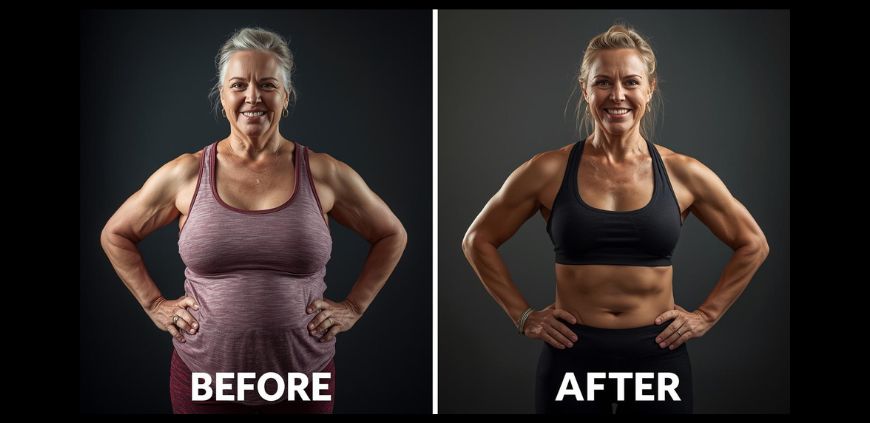
Women over 40 do not need to shrink. They need to strengthen.
When muscle increases, metabolism becomes more flexible. Fat loss becomes easier. Blood sugar stabilizes. Hormones regulate more efficiently. Bone density improves. Energy rises. Confidence returns.
This is not about looking 25.
It is about being powerful at 40. Resilient at 50. Capable at 60. Independent at 70 and beyond.
Muscle changes how you age. And it is never too late to build it.

Sara Banta
Sara Banta is an NANP Certified Dietary Supplement Professional, Health Coach, and CEO & Founder of Accelerated Health Products. She is also the host of the top-rated podcast Accelerated Health with Sara Banta, where she shares practical strategies to support energy, metabolism, hormones, and overall wellness. Sara is passionate about helping people take control of their health naturally through education and innovative formulations.
- Sara Banta
- Sara Banta
- Sara Banta
- Sara Banta
- Sara Banta
- Sara Banta
- Sara Banta
- Sara Banta
- Sara Banta
- Sara Banta
- Sara Banta
- Sara Banta
- Sara Banta
- Sara Banta
- Sara Banta
- Sara Banta
- Sara Banta
- Sara Banta
- Sara Banta
- Sara Banta
- Sara Banta
- Sara Banta
- Sara Banta
- Sara Banta
- Sara Banta
- Sara Banta
- Sara Banta
- Sara Banta
- Sara Banta
- Sara Banta
- Sara Banta
- Sara Banta
- Sara Banta
- Sara Banta
- Sara Banta
- Sara Banta
- Sara Banta
- Sara Banta
- Sara Banta
- Sara Banta
- Sara Banta
- Sara Banta
- Sara Banta
- Sara Banta
- Sara Banta
- Sara Banta
- Sara Banta
- Sara Banta
- Sara Banta
- Sara Banta
- Sara Banta
- Sara Banta
- Sara Banta
- Sara Banta
- Sara Banta
- Sara Banta
- Sara Banta
- Sara Banta
- Sara Banta
- Sara Banta
- Sara Banta
- Sara Banta
- Sara Banta
- Sara Banta
- Sara Banta
- Sara Banta
- Sara Banta
- Sara Banta
- Sara Banta
- Sara Banta
- Sara Banta
- Sara Banta
- Sara Banta
- Sara Banta
- Sara Banta
- Sara Banta
- Sara Banta
- Sara Banta
- Sara Banta
- Sara Banta
- Sara Banta
- Sara Banta
- Sara Banta
- Sara Banta
- Sara Banta
- Sara Banta
- Sara Banta
- Sara Banta
- Sara Banta
- Sara Banta
- Sara Banta
- Sara Banta
- Sara Banta
- Sara Banta
- Sara Banta
- Sara Banta
- Sara Banta
- Sara Banta
- Sara Banta
- Sara Banta
- Sara Banta
- Sara Banta
- Sara Banta
- Sara Banta
- Sara Banta
- Sara Banta
- Sara Banta
- Sara Banta
- Sara Banta
- Sara Banta
- Sara Banta
- Sara Banta
- Sara Banta
- Sara Banta
- Sara Banta
- Sara Banta
- Sara Banta
- Sara Banta
- Sara Banta
- Sara Banta
- Sara Banta
- Sara Banta
- Sara Banta
- Sara Banta
- Sara Banta
- Sara Banta
- Sara Banta
- Sara Banta
- Sara Banta
- Sara Banta
- Sara Banta
- Sara Banta
- Sara Banta
- Sara Banta
- Sara Banta
- Sara Banta
- Sara Banta
- Sara Banta
- Sara Banta
- Sara Banta
- Sara Banta
- Sara Banta
- Sara Banta
- Sara Banta
- Sara Banta
- Sara Banta
- Sara Banta
- Sara Banta
- Sara Banta
- Sara Banta
- Sara Banta
- Sara Banta
- Sara Banta
- Sara Banta
- Sara Banta
- Sara Banta
- Sara Banta
- Sara Banta
- Sara Banta
- Sara Banta
- Sara Banta
- Sara Banta
- Sara Banta
- Sara Banta
- Sara Banta
- Sara Banta
- Sara Banta
- Sara Banta
- Sara Banta
- Sara Banta
- Sara Banta
- Sara Banta
- Sara Banta
- Sara Banta
- Sara Banta
- Sara Banta
- Sara Banta
- Sara Banta
- Sara Banta
- Sara Banta
- Sara Banta
- Sara Banta
- Sara Banta
- Sara Banta
- Sara Banta
- Sara Banta
- Sara Banta
- Sara Banta
- Sara Banta
- Sara Banta
- Sara Banta
- Sara Banta
- Sara Banta
- Sara Banta
- Sara Banta
- Sara Banta
- Sara Banta
- Sara Banta
- Sara Banta
- Sara Banta
- Sara Banta
- Sara Banta
- Sara Banta
- Sara Banta
- Sara Banta
- Sara Banta
- Sara Banta
- Sara Banta
- Sara Banta
- Sara Banta
- Sara Banta
- Sara Banta
- Sara Banta
- Sara Banta
- Sara Banta
- Sara Banta
- Sara Banta
- Sara Banta
- Sara Banta
- Sara Banta
- Sara Banta