If you’ve followed my work for any length of time, you’ll know I’m passionate about the nutrients that support your body at the cellular level. I’ve spent years educating people about iodine because it’s one of the most misunderstood minerals in modern health. But there’s another essential trace mineral that deserves far more attention than it receives, and that’s copper.
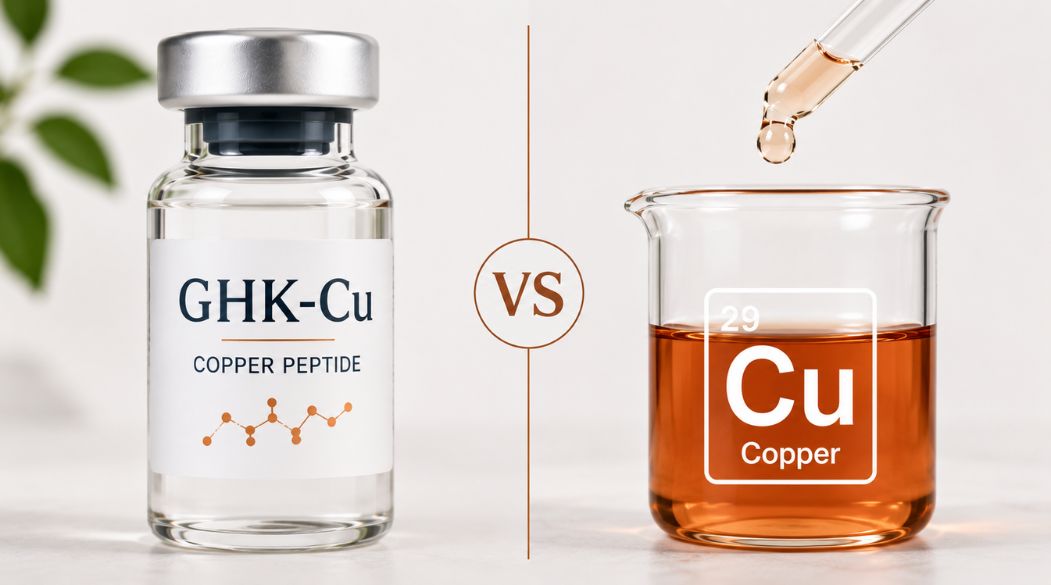
Before we go any further, I want to clear up one of the biggest misconceptions about copper. As copper peptides like GHK-Cu continue to grow in popularity, it’s easy to assume they’re simply another form of dietary copper. They aren’t. While they all contain copper, copper peptides, topical copper products and dietary copper each have very different roles in the body. I’ll explain why later in this article because it’s an important distinction that often causes confusion.
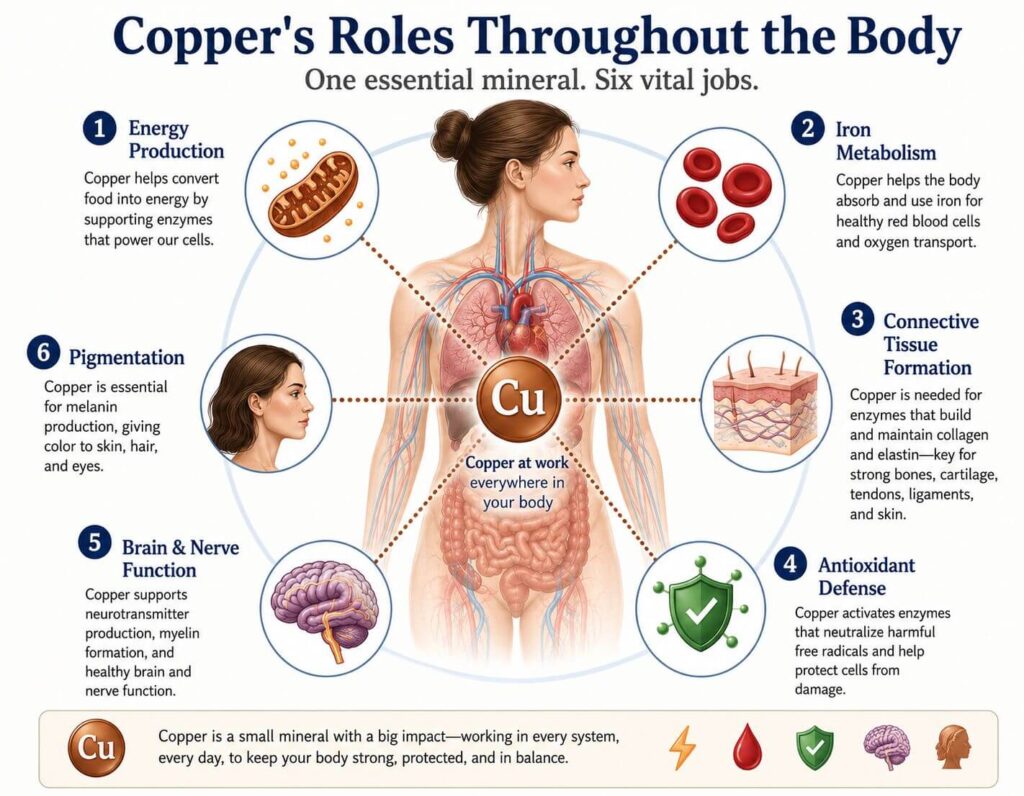
Copper isn’t simply another nutrient your body needs in tiny amounts. It’s involved in hundreds of enzyme-driven reactions that help your cells produce energy, regulate iron metabolism, build healthy connective tissue, support normal skin and hair pigmentation, protect against oxidative stress, and maintain healthy brain and nervous system function.
What makes copper so remarkable is that it doesn’t have just one job. Instead, it works quietly behind the scenes, supporting many of the systems your body relies on every single day. Without adequate copper, countless biological processes simply can’t function as efficiently as they were designed to.
So why has such an important mineral remained largely overlooked?
Unlike many nutrients that have become household names, copper has quietly stayed in the background. It doesn’t have the marketing appeal of collagen or the mainstream attention given to many popular supplements, yet researchers continue to uncover just how essential copper is for normal human physiology.
That’s exactly why I wanted to write this article.
Copper isn’t a miracle mineral, and more isn’t always better. Like every nutrient, balance is essential. My goal is to help you understand what copper does, why it matters, and why it’s becoming an increasingly important topic in nutritional science and practitioner-led healthcare.
Copper is much more than a trace mineral
Copper is classified as a trace mineral because your body only needs very small amounts to function normally. Unfortunately, that simple classification has led many people to underestimate just how important it really is.
Although your body only requires tiny amounts of copper, it’s essential for hundreds of enzyme-driven reactions that keep you alive and functioning every day. One of its most important roles is supporting healthy mitochondrial function. Mitochondria are the tiny energy-producing powerhouses inside your cells, and they rely on copper to help generate the energy every organ, tissue and cell depends on. Copper also helps regulate iron metabolism, supports the formation of collagen and elastin, protects against oxidative stress, contributes to normal brain and nervous system function, and helps maintain healthy pigmentation of the skin, hair and eyes.
What makes copper so remarkable isn’t simply the number of jobs it performs—it’s the number of systems it influences. From energy production and connective tissue to cardiovascular health, neurological function, antioxidant defense and immune health, copper plays a role throughout the body. Few nutrients have such a broad reach.
This is something I talk about often: health begins at the cellular level, and healthy mitochondria are at the heart of that process. Every organ in your body depends on energy, and every cell depends on healthy mitochondria to produce it. Copper is one of the foundational nutrients that helps make that possible. It may only be required in tiny amounts, but its impact extends throughout virtually every system in the body.
Why copper is back in the spotlight
For a long time, copper has been one of those minerals that almost nobody talks about. It has never received the attention of nutrients like iron or vitamin D, yet your body depends on it every single day. In fact, without enough copper, many of the systems that produce energy and keep your body functioning simply can’t do their jobs properly.
Thankfully, people are starting to ask more questions.
One of the people helping bring copper back into the conversation is researcher Morley Robbins, founder of the Root Cause Protocol. Morley has spent many years studying how minerals work together, particularly the relationship between copper, iron and the mitochondria—the tiny powerhouses inside your cells that produce energy.
That’s exactly why I invited Morley onto the Accelerated Health with Sara Banta podcast.
Our conversation wasn’t about finding another miracle nutrient or promoting a particular protocol. It was about understanding how the body really works. We talked about why copper and iron need to work together, why minerals should never be viewed in isolation, and why healthy mitochondria are fundamental to energy production and overall health.
One of the biggest lessons from that conversation is that good health isn’t built on a single nutrient. It’s built on nutrients working together the way nature intended. Copper is a perfect example. Although your body only needs it in tiny amounts, it helps your mitochondria produce energy, supports hundreds of enzymes, contributes to healthy connective tissue, helps regulate iron metabolism, and plays an essential role in your brain, nervous system and natural antioxidant defenses.
Perhaps that’s why copper is finally stepping into the spotlight.
Not because it suddenly became important.
Because we’re finally beginning to understand the remarkable role it has always played in human health.
Copper and iron metabolism
One of the most overlooked roles of copper is the part it plays in iron metabolism. Most people know iron is essential for healthy red blood cells and oxygen transport, so when fatigue, weakness or other symptoms commonly associated with low iron appear, the usual response is to check iron levels and, if they are low, increase iron intake.
The problem is that iron is not always the problem.
Many people experience symptoms that feel exactly like iron deficiency, only to have blood tests come back normal. They are not anemic, their iron levels are within range, and the investigation often stops there. Yet the symptoms continue because copper deficiency may be the real issue that has been overlooked.
Copper is essential for the way your body transports, regulates and uses iron. If copper status is low, your body may struggle to make proper use of the iron that is already available. In that situation, taking more iron does not necessarily solve the problem because the issue is not a lack of iron. It is a lack of the copper needed to help iron function as it should.
This is why copper deficiency can look so much like iron deficiency. Fatigue, weakness and anemia-like symptoms may all appear, yet standard iron testing may not explain why someone still feels unwell. That is exactly why copper deserves far more attention when iron levels are normal but the symptoms suggest otherwise.
If you’d like to learn more about this fascinating relationship, I explore it in much greater detail in my article, Think You Need Iron? What You Need Might Surprise You… Copper. I also discuss the connection between copper and iron metabolism with Morley in this in-depth podcast interview, where we unpack why these two minerals are so closely linked and why balance matters.
The key point is simple. When someone feels iron deficient but their labs say otherwise, it may be time to stop looking only at iron. In many cases, copper deficiency may be the missing piece.
Copper and thyroid health
When people think about thyroid health, iodine usually gets all the attention—and rightly so. Without iodine, your body can’t produce thyroid hormones. But healthy thyroid function depends on much more than iodine alone.
Copper and iron work together during thyroid hormone production, each performing a different but equally important role. Copper is needed to produce ceruloplasmin, a copper-dependent protein that helps make iodine available for thyroid hormone synthesis. Iron, on the other hand, is required by the enzyme thyroid peroxidase (TPO), which converts iodine into the thyroid hormones T4 and T3. If either copper or iron is lacking, this process may become less efficient.
Copper’s role doesn’t stop there. Ceruloplasmin acts as a ferroxidase, helping convert iron into the form that can be transported around the body. Without enough copper, your body may struggle to utilize iron properly, even when your dietary iron intake is adequate. This is sometimes referred to as functional iron deficiency.
That’s one reason interpreting iron studies isn’t always straightforward. Ferritin is commonly used as a marker of iron stores, but it’s also influenced by inflammation and doesn’t always reflect how efficiently iron is being transported and used. Looking at ferritin alone may not always provide the full picture, particularly when copper status has been overlooked.
This is why I always encourage people to think beyond a single nutrient. Healthy thyroid function depends on iodine, copper, iron, selenium and zinc all working together. The thyroid doesn’t work in isolation, and neither do the nutrients that support it.
Copper and mitochondria
Healthy mitochondria are essential for life. These tiny structures inside your cells produce ATP, the energy that powers virtually every process in your body. Every heartbeat, every muscle contraction, every nerve signal and every thought depends on healthy mitochondrial function.
That’s one of the reasons mitochondrial peptides like MOTS-c have attracted so much attention in recent years. Researchers have been exploring their potential role in supporting healthy metabolism, energy production and the body’s response to metabolic stress. Interest in MOTS-c continues to grow because healthy mitochondria are increasingly recognized as one of the foundations of long-term health.
What many people don’t realize is that mitochondria also depend on essential nutrients to do their job.
Copper is one of those nutrients.
Inside your mitochondria is an enzyme called cytochrome c oxidase, which is responsible for one of the final and most important steps in producing ATP. Copper is an essential part of that enzyme, meaning without enough dietary copper, healthy mitochondrial energy production simply can’t occur as efficiently. Copper – Linus Pauling Institute, Oregon State University
This is why I always come back to the same message: there is no single nutrient, peptide or supplement that does everything. Your body works as an integrated system. Peptides like MOTS-c may help support healthy mitochondrial function, while nutrients like copper provide part of the essential machinery those mitochondria rely on every single day.
That’s why I believe nutrition should always be the foundation. Your body can’t manufacture copper, and no peptide can replace an essential nutrient. Building healthy mitochondria starts with giving them the nutrients they need to produce energy efficiently.
Why copper peptides have become one of the biggest trends in health
If you’ve spent any time reading about longevity, regenerative medicine or advanced skincare over the past few years, you’ve almost certainly come across copper peptides.
From anti-aging serums and hair growth products to regenerative medicine clinics and peptide therapies, copper peptides have become one of the fastest-growing areas of research. Much of that interest centers around a naturally occurring copper peptide called GHK-Cu, first identified in human plasma in the 1970s. Since then, researchers have been investigating its potential role in tissue repair, wound healing, collagen production and healthy aging, creating enormous interest among scientists, clinicians and the skincare industry. GHK-Cu: From discovery to therapeutic potential
As exciting as this research is, it has also created one of the biggest misconceptions surrounding copper.
Many people now assume that copper peptides and dietary copper are the same thing.
They aren’t.
Although both contain copper, they have completely different roles.
Copper peptides are highly specialized compounds where copper is bound to a small peptide. Researchers are studying these compounds because of the way they interact with specific biological pathways involved in tissue repair and skin regeneration.
Dietary copper, on the other hand, is an essential trace mineral that your body must obtain through food or supplementation. Long before scientists began researching GHK-Cu, copper was already performing hundreds of vital functions throughout the body. Every day it helps activate enzymes involved in cellular energy production, iron metabolism, connective tissue formation, antioxidant protection, healthy pigmentation and normal brain function. Without adequate copper, many of these enzymes simply can’t perform their normal roles. Copper Fact Sheet for Health Professionals – National Institutes of Health
That’s an important distinction.
Copper peptides represent one very specific application of copper biology, while dietary copper provides the nutritional foundation that allows those biological processes to occur in the first place.
In many ways, I think the popularity of copper peptides has done the copper story a great service. It has introduced millions of people to a mineral they may never have thought about before. My hope is that it also encourages people to look beyond topical applications and appreciate the essential role copper has always played throughout the body.
Long before copper became a trending ingredient in skincare or regenerative medicine, it was quietly helping your body produce energy, regulate iron, support connective tissue and activate hundreds of enzymes every single day.
Copper has transformed the skincare industry
From luxury serums and face creams to regenerative treatments and anti-aging products, copper peptides have become one of the most sought-after ingredients in modern cosmetic science. As mentioned, their rise has been driven largely by decades of research into GHK-Cu, a naturally occurring copper peptide that researchers continue to investigate for its potential role in skin renewal, collagen production, wound healing and healthy aging. GHK-Cu: From discovery to therapeutic potential
What I find particularly interesting is that the skincare industry recognized the value of copper long before most people ever thought about taking a copper supplement.
Scientists became interested in copper because healthy skin is constantly repairing itself. Every day your body is producing collagen, rebuilding connective tissue and replacing damaged skin cells. Copper is involved in many of the enzymes that support those natural repair processes, making it an obvious area of research for healthy aging and regenerative skincare.
At the same time, it’s important to remember that copper peptides used in skincare are not the same as dietary copper.
Topical copper peptides are designed to work on the skin’s surface and within the skin itself, while dietary copper is absorbed through the digestive system and becomes available to the hundreds of copper-dependent enzymes that support normal function throughout the entire body. Although both contain copper, they serve very different purposes and should never be considered interchangeable.
I believe that’s one of the biggest misconceptions surrounding copper today.
People have become fascinated by what copper can do on the skin, but far fewer appreciate what copper is already doing inside the body every single day. Long before copper became a trending skincare ingredient, it was quietly helping your body produce cellular energy, regulate iron, strengthen connective tissue and support hundreds of biological processes essential for good health.
Perhaps that’s the greatest lesson copper teaches us.
Healthy skin doesn’t begin with what you apply to the outside.
It begins with giving your body the nutrients it needs to build healthy skin from within.
Copper – the hidden hero of fat loss
Weight loss has never been more popular. Millions of people are now using GLP-1 medications and peptides such as Ozempic® (semaglutide), Wegovy®, Mounjaro® (tirzepatide) and retatrutide to support weight management. While these therapies are changing the conversation around obesity, they don’t change one fundamental truth—your body still needs the right nutrients to produce energy and burn fat efficiently.
This is where copper becomes incredibly interesting.
For years, copper was rarely discussed in relation to body composition. Today, researchers are uncovering just how important this trace mineral is for healthy metabolism and normal fat metabolism.
Your body doesn’t simply “burn fat.” It relies on an enormous network of hormones, enzymes, mitochondria and nutrients working together. Copper is one of the essential minerals that helps keep that system running.
Researchers at Berkeley Lab discovered that copper helps regulate the way fat cells metabolize stored fat and influences pathways involved in energy expenditure and insulin sensitivity.
One of the most fascinating discoveries involves an enzyme called phosphodiesterase 3 (PDE3). Think of PDE3 as one of your body’s natural brakes on fat metabolism. Researchers found that copper can bind to this enzyme and reduce its activity, making it easier for fat cells to release stored fat. In simple terms, adequate copper helps remove one of the natural brakes that can limit normal fat metabolism.
Researchers at Johns Hopkins Medicine have also shown that copper deficiency is associated with larger fat cells and altered lipid metabolism, adding to the growing evidence that copper plays an important role in maintaining healthy metabolic function.
This doesn’t mean copper is a miracle weight-loss nutrient, and it certainly doesn’t replace healthy eating, regular movement or therapies prescribed by your healthcare practitioner. What it does tell us is something much more important: whether you’re relying on lifestyle changes, GLP-1 medications or peptides, your body still depends on essential nutrients like copper to support the normal metabolic pathways involved in producing energy and burning fat.
If you’d like to explore this topic in more detail, I’ve written a dedicated article called Copper for Fat Loss – The Hidden Hero You’ve Never Heard About.
Why copper deficiency is often overlooked
Considering how many important jobs copper performs throughout the body, you might expect copper deficiency to be something routinely discussed by healthcare practitioners.
In reality, it rarely is.
One of the biggest reasons is that copper deficiency doesn’t produce one clear, unmistakable symptom. Instead, it often presents as a collection of seemingly unrelated problems that can easily be mistaken for something else. Fatigue, difficulty concentrating, poor energy, anemia and even changes affecting connective tissue or metabolism can all have multiple causes, making copper deficiency easy to overlook.
The challenge is that copper influences so many different biological systems. Rather than producing one clear, recognizable pattern, inadequate copper tends to affect whichever system is under the greatest demand. That’s why two people with low copper status may experience completely different symptoms.
I also think we’ve simply stopped talking about copper.
When someone complains of fatigue, the conversation usually turns to iron. If they’re concerned about healthy aging, collagen becomes the focus. If they’re trying to lose weight, attention shifts to protein, GLP-1 medications or the latest fat-loss supplement. Copper rarely enters the discussion, even though we’ve already seen how closely it’s connected to each of those systems.
Our modern diet may also be contributing to the problem. Foods naturally rich in copper, such as liver, oysters and shellfish, aren’t eaten nearly as often as they once were. At the same time, highly processed foods have become the norm, while some people unknowingly reduce copper absorption through long-term high-dose zinc supplementation.
This doesn’t mean everyone is copper deficient, but it does mean copper deserves the same consideration we give to other essential nutrients. Sometimes the nutrients we hear about the least are quietly doing some of the most important work.
Should you supplement with copper?
After everything we’ve explored in this article, you probably won’t be surprised by my answer.
Yes—I believe many people would benefit from paying closer attention to their copper intake.
Not because copper is the latest health trend, but because it’s involved in so many of the biological processes we’ve discussed. From supporting healthy iron metabolism and cellular energy production to helping maintain connective tissue, healthy mitochondria and normal fat metabolism, copper is one of the essential nutrients your body depends on every single day.
For me, supplementation has never been about replacing good nutrition. It’s about filling the nutritional gaps that modern lifestyles often create.
As with every supplement I recommend, quality matters. Not all copper supplements are created equal, which is exactly why I decided to develop my own formulation.
Why I chose to include copper in the Accelerated Health Products line of supplements
Long before copper peptides, mitochondrial peptides and copper skincare became popular, copper already had a place in the Accelerated Health Products range.
The reason was simple. Copper has always been an essential trace mineral. It has always supported healthy mitochondrial function, iron metabolism, connective tissue, antioxidant defenses and hundreds of enzyme systems throughout the body. Copper hasn’t suddenly become important—we’re simply talking about it more than we used to.
Food will always be the foundation of good health, and some of the richest dietary sources of copper include liver, oysters, shellfish, nuts, seeds and dark chocolate. But let’s be honest—how many people regularly eat those foods today? For many people, they’re no longer part of everyday life. Add modern farming practices, depleted soils and highly processed foods, and it’s easy to see why obtaining enough copper through diet alone may be more challenging than it once was.
That’s why I chose to include copper in the Accelerated Health Products range years ago.
As with every product we create, I wasn’t interested in producing just another supplement. I wanted a liquid copper formula that was easy to take, highly bioavailable and manufactured to the same uncompromising standards we’ve followed since the very beginning.
Accelerated Scalar Copper® is manufactured in the USA using 99.99% ultra-fine pure copper suspended in ozonated and UV-sterilized distilled water. It is then processed using our proprietary water implosion technology before being enhanced with our unique Scalar Copper Technology.
It’s exciting to see copper finally receiving the attention it deserves. The research continues to grow, but the reason for including copper in our range has never changed. Give your body the nutrients it needs, and it has an incredible ability to function the way it was designed.
The bottom line
Copper may only be needed in tiny amounts, but its contribution to human health is anything but small.
From helping your mitochondria produce energy and supporting healthy iron metabolism to maintaining connective tissue, antioxidant defenses and hundreds of enzyme systems, copper is involved in many of the processes that keep your body functioning every single day.
Perhaps that’s why copper has been so easy to overlook. It works quietly, behind the scenes, without demanding attention.
But quiet doesn’t mean unimportant.
In fact, some of the body’s most essential nutrients are the ones we hear about the least.
As our understanding of copper continues to grow, my hope is that it earns the recognition it has always deserved—not as the latest health trend, but as one of the essential nutrients your body has relied on all along.
Frequently Asked Questions About Dietary Copper
Copper is an essential trace mineral involved in hundreds of enzymatic reactions throughout the body. It helps support cellular energy production, iron metabolism, connective tissue formation, healthy brain and nervous system function, antioxidant protection and normal immune function. Although only small amounts are required, copper plays an essential role in maintaining normal health.
Copper helps your body regulate and utilize iron. Before iron can be transported through the bloodstream and used to produce healthy red blood cells, it relies on copper-dependent proteins such as ceruloplasmin and hephaestin. Without adequate copper, iron metabolism may not function as efficiently as it should.
Yes. Copper deficiency can produce symptoms similar to iron deficiency, including fatigue, weakness and anemia. That’s because copper plays an important role in helping your body transport and utilize iron. However, iron deficiency has many possible causes, so proper testing and professional advice are always recommended before starting supplementation.
Yes. Copper is required for cytochrome c oxidase, one of the key enzymes involved in mitochondrial energy production. Healthy mitochondria produce ATP, the energy every cell in your body depends on to function normally.
Copper isn’t a weight-loss supplement, but research has shown that it plays an important role in normal fat metabolism and energy production. Scientists have also identified copper as a regulator of phosphodiesterase 3 (PDE3), an enzyme involved in fat metabolism. Maintaining healthy copper status supports normal metabolic function, which is one of the many factors involved in healthy body composition.
No. Copper peptides and dietary copper serve very different purposes. Copper peptides are specialized compounds being studied for applications such as skincare and tissue repair, while dietary copper is an essential trace mineral your body requires every day to support hundreds of normal biological functions.
Copper peptides, particularly GHK-Cu, have become one of the most researched ingredients in healthy aging skincare because of their potential role in supporting skin renewal and tissue repair. This has led to a growing interest in copper, although topical copper peptides and dietary copper are not interchangeable.
Some of the richest dietary sources of copper include liver, oysters, shellfish, nuts, seeds, legumes, mushrooms and dark chocolate. Unfortunately, many people no longer consume these foods regularly, which is one reason copper intake may be lower than it once was.

Sara Banta
Sara Banta is an NANP Certified Dietary Supplement Professional, Health Coach, and CEO & Founder of Accelerated Health Products. She is also the host of the top-rated podcast Accelerated Health with Sara Banta, where she shares practical strategies to support energy, metabolism, hormones, and overall wellness. Sara is passionate about helping people take control of their health naturally through education and innovative formulations.
- Sara Banta
- Sara Banta
- Sara Banta
- Sara Banta
- Sara Banta
- Sara Banta
- Sara Banta
- Sara Banta
- Sara Banta
- Sara Banta
- Sara Banta
- Sara Banta
- Sara Banta
- Sara Banta
- Sara Banta
- Sara Banta
- Sara Banta
- Sara Banta
- Sara Banta
- Sara Banta
- Sara Banta
- Sara Banta
- Sara Banta
- Sara Banta
- Sara Banta
- Sara Banta
- Sara Banta
- Sara Banta
- Sara Banta
- Sara Banta
- Sara Banta
- Sara Banta
- Sara Banta
- Sara Banta
- Sara Banta
- Sara Banta
- Sara Banta
- Sara Banta
- Sara Banta
- Sara Banta
- Sara Banta
- Sara Banta
- Sara Banta
- Sara Banta
- Sara Banta
- Sara Banta
- Sara Banta
- Sara Banta
- Sara Banta
- Sara Banta
- Sara Banta
- Sara Banta
- Sara Banta
- Sara Banta
- Sara Banta
- Sara Banta
- Sara Banta
- Sara Banta
- Sara Banta
- Sara Banta
- Sara Banta
- Sara Banta
- Sara Banta
- Sara Banta
- Sara Banta
- Sara Banta
- Sara Banta
- Sara Banta
- Sara Banta
- Sara Banta
- Sara Banta
- Sara Banta
- Sara Banta
- Sara Banta
- Sara Banta
- Sara Banta
- Sara Banta
- Sara Banta
- Sara Banta
- Sara Banta
- Sara Banta
- Sara Banta
- Sara Banta
- Sara Banta
- Sara Banta
- Sara Banta
- Sara Banta
- Sara Banta
- Sara Banta
- Sara Banta
- Sara Banta
- Sara Banta
- Sara Banta
- Sara Banta
- Sara Banta
- Sara Banta
- Sara Banta
- Sara Banta
- Sara Banta
- Sara Banta
- Sara Banta
- Sara Banta
- Sara Banta
- Sara Banta
- Sara Banta
- Sara Banta
- Sara Banta
- Sara Banta
- Sara Banta
- Sara Banta
- Sara Banta
- Sara Banta
- Sara Banta
- Sara Banta
- Sara Banta
- Sara Banta
- Sara Banta
- Sara Banta
- Sara Banta
- Sara Banta
- Sara Banta
- Sara Banta
- Sara Banta
- Sara Banta
- Sara Banta
- Sara Banta
- Sara Banta
- Sara Banta
- Sara Banta
- Sara Banta
- Sara Banta
- Sara Banta
- Sara Banta
- Sara Banta
- Sara Banta
- Sara Banta
- Sara Banta
- Sara Banta
- Sara Banta
- Sara Banta
- Sara Banta
- Sara Banta
- Sara Banta
- Sara Banta
- Sara Banta
- Sara Banta
- Sara Banta
- Sara Banta
- Sara Banta
- Sara Banta
- Sara Banta
- Sara Banta
- Sara Banta
- Sara Banta
- Sara Banta
- Sara Banta
- Sara Banta
- Sara Banta
- Sara Banta
- Sara Banta
- Sara Banta
- Sara Banta
- Sara Banta
- Sara Banta
- Sara Banta
- Sara Banta
- Sara Banta
- Sara Banta
- Sara Banta
- Sara Banta
- Sara Banta
- Sara Banta
- Sara Banta
- Sara Banta
- Sara Banta
- Sara Banta
- Sara Banta
- Sara Banta
- Sara Banta
- Sara Banta
- Sara Banta
- Sara Banta
- Sara Banta
- Sara Banta
- Sara Banta
- Sara Banta
- Sara Banta
- Sara Banta
- Sara Banta
- Sara Banta
- Sara Banta
- Sara Banta
- Sara Banta
- Sara Banta
- Sara Banta
- Sara Banta
- Sara Banta
- Sara Banta
- Sara Banta
- Sara Banta
- Sara Banta
- Sara Banta
- Sara Banta
- Sara Banta
- Sara Banta
- Sara Banta
- Sara Banta
- Sara Banta
- Sara Banta
- Sara Banta
- Sara Banta
- Sara Banta
- Sara Banta
- Sara Banta
- Sara Banta
- Sara Banta
- Sara Banta
- Sara Banta
- Sara Banta
- Sara Banta
- Sara Banta