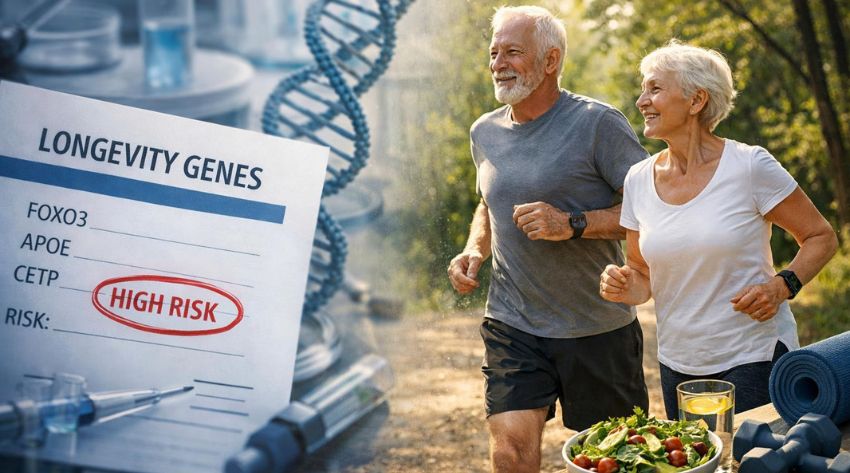
For years, the term longevity has been framed as a lifestyle issue—eat well, exercise, manage stress. While those things matter, it’s important to clarify that longevity refers not just to living longer, but to preserving biological function and quality of life as we age. Longevity is distinct from simply adding years; it emphasizes maintaining vitality and well-being throughout a long life.
A recent study published in Science found that genetics may account for more than half of the variability in lifespan—significantly more than previously believed. In longevity research, the average number often refers to the typical lifespan or life expectancy of people born in a given age or cohort, which is different from the maximum lifespan that only a few individuals reach.
This doesn’t mean our future is fixed; it means we are born with a biological ceiling and a biological floor. Where we land between the two depends on how well our internal systems are supported over time.
Longevity isn’t about chasing extra years at the end of life. The goal is not just to live longer, but to achieve a long life with preserved function and well-being, aiming to match or exceed the typical lifespan while maintaining independence and health. It’s about slowing the rate of biological breakdown that pulls people toward disease, frailty, cognitive decline, and loss of independence long before old age should set in.
Genes Are the Blueprint — Metabolism Builds the Outcome
Genetics provides the instructions, but they don’t execute the work. That job belongs to metabolism, detoxification, hormone signaling, mitochondrial energy production, and tissue repair.
Each person’s longevity is influenced by various factors, including genetics, metabolism, and lifestyle choices. These various factors—such as diet, exercise, and environmental exposures—interact to determine how well the body ages and repairs itself.
When these systems function efficiently, the body maintains resilience even under stress. When they are overloaded or congested, aging accelerates—not because time moves faster, but because repair slows down.
This explains why people with similar genetics can age in dramatically different ways. One maintains strength, clarity, and mobility well into later decades, while the other experiences fatigue, inflammation, hormone dysfunction, and cognitive decline much earlier. The difference is rarely motivation or discipline. It’s biological capacity.
Why Longevity Was Misunderstood for So Long
Earlier longevity research underestimated the role of genetics because most historical populations didn’t live long enough for genetics to fully express themselves.
Longevity statistics are often based on cohorts of people born in specific years, allowing researchers to track changes in lifespan and mortality risk over time. Infectious disease, poor sanitation, and physical danger claimed lives early, leading to premature death and masking the influence of genetic aging pathways.
In recent centuries, life expectancy has increased dramatically due to advances in public health, nutrition, and medicine. Modern medicine removed many of those threats—but introduced new ones.
Today, the body must manage:
Chronic chemical exposure
Heavy metals and microplastics
Endocrine disruptors
Ultra-processed foods
Halogens that interfere with iodine signaling
Persistent low-grade inflammation
These don’t cancel genetics. They suppress them.
Longevity in the modern world isn’t limited by survival—it’s limited by how much metabolic stress the body can clear.
Longevity Is a Systems Problem, Not an Anti-Aging Trend
There will never be a single gene, pill, or protocol that creates longevity. Aging is the cumulative outcome of how well the body performs its most basic functions day after day.
Longevity depends on:
Efficient energy production
Clean hormone signaling
Reliable detoxification
Protein availability for repair
Controlled inflammation
Mineral sufficiency
Supporting these foundational systems can lead to many positive effects, including improved resilience, well-being, and a greater capacity to thrive as you age.
When these systems work together, the body maintains structure and function far longer than expected. When they don’t, decline accelerates—even in people doing “everything right.”
This is why healthspan matters more than lifespan. Living longer has little value if those years are marked by exhaustion, pain, cognitive decline, and dependency. Maintaining both physical and mental health into older age is essential for a fulfilling and independent life. These strategies have positive effects on longevity and overall quality of life.
Where We Actually Have Control
While genetics may account for roughly 55% of lifespan, 45% is shaped by daily biological stress. That stress comes less from time and more from accumulation. Taking proactive steps to stay healthy—such as optimizing nutrition, managing stress, and supporting detoxification—can help you approach your maximum lifespan under ideal conditions.
The body is constantly deciding whether it has the resources to repair or whether it must prioritize survival. When detox pathways are overwhelmed, nutrients are missing, and signaling is impaired, the body chooses survival—and aging speeds up.
This is where intelligent nutritional and metabolic support changes outcomes—not by forcing performance, but by removing bottlenecks.
The Foundations That Support Longevity at the Cellular Level
Acceleradine® Iodine: Restoring Cellular Communication
Iodine is one of the most misunderstood longevity nutrients. While it’s often associated with thyroid health, its role extends far beyond metabolism.
Iodine is required for efficient mitochondrial energy production, antioxidant protection, hormone signaling, and healthy cellular turnover. Yet modern exposure to fluoride, bromide, and chlorine blocks iodine at receptor sites throughout the body—including the brain, thyroid, reproductive tissues, fat cells, and glands.
When iodine is displaced, metabolism slows, cellular communication weakens, and oxidative stress rises. Over time, this contributes to fatigue, hormone imbalance, and accelerated aging.
Acceleradine® provides monoatomic iodine that bypasses common absorption issues and supports deep tissue signaling. Without iodine sufficiency, longevity pathways don’t function optimally—regardless of genetics.
Accelerated Liver Care®: The True Longevity Gatekeeper
Every longevity pathway runs through the liver. The liver determines whether toxins are eliminated or recirculated, whether hormones are cleared or accumulate, and whether inflammation resolves or becomes chronic.
When the liver is congested, estrogen and cortisol back up, thyroid hormone conversion slows, fat metabolism stalls, and mitochondrial output drops. These changes are often mistaken for “aging,” when they are actually signs of impaired clearance.
Accelerated Liver Care® supports bile flow, phase I–III detoxification, and thyroid hormone conversion. When the liver flows, metabolic efficiency improves, and the body regains its ability to repair rather than decline. Holistic detox programs can further support this process.
Longevity isn’t possible without detoxification capacity.
Protein: The Structural Currency of Longevity
Wild Animal Protein + Accelerated AMINOS™
Loss of muscle and protein synthesis is one of the strongest predictors of early mortality. Protein is required for enzymes, hormones, neurotransmitters, immune repair, connective tissue, and mitochondrial function.
Wild animal protein provides a clean, bioavailable amino acid profile with a lower toxin burden. Accelerated AMINOS™ fill in gaps by delivering essential amino acids directly—without digestion stress, fermentation, or histamine release.
Maintaining muscle mass and a healthy diet can reduce the risk of chronic diseases such as cancer, support bone health, and support lung function, all of which are important for longevity. This supports muscle preservation, faster recovery, stronger detox pathways, and more efficient energy production—benefits often associated with supplements. Longevity is not about eating less—it’s about maintaining structure.
Brain Energy & Neurological Longevity
Accelerated Cogniblast® + Accelerated Methylene Blue®
Longevity is not just about how long cells survive — it’s about how well they communicate, adapt, and produce energy over time. And no system is more sensitive to decline than the brain and nervous system.
Cognitive slowing, mood changes, brain fog, poor motivation, and emotional instability are often labeled as “aging,” but in reality, they are signs of mitochondrial inefficiency and neurological energy failure.
This is where targeted brain and mitochondrial support becomes essential.
Accelerated Cogniblast® is designed to nourish the brain without stimulation. Instead of forcing neurotransmitters or relying on caffeine-driven output, it supports the pathways that allow the brain to generate clean, sustainable energy.
Cogniblast® may help support:
Dopamine and acetylcholine balance (motivation, focus, memory)
Cerebral circulation and oxygen delivery
Stress resilience without overstimulation
Mental clarity and emotional stability
When the brain is properly fueled, it doesn’t need to compensate with anxiety, overactivation, or burnout. This kind of regulation is foundational for long-term neurological health and quality of life as we age.
Accelerated Methylene Blue® works even deeper — at the mitochondrial level.
Mitochondria are the engines of longevity. They determine how efficiently cells produce ATP, manage oxidative stress, and resist age-related decline. The brain, heart, and muscles are especially dependent on mitochondrial efficiency.
Methylene Blue may help support:
Electron transport chain efficiency
ATP production inside neurons and other high-demand tissues
Oxygen utilization at the cellular level
Reduced oxidative stress and mitochondrial fatigue
Brain endurance, focus, and cognitive resilience
As we age, mitochondrial efficiency naturally declines — unless it is supported. When mitochondria lose efficiency, the body compensates by slowing metabolism, conserving energy, and reducing repair. This is one of the earliest drivers of biological aging.
Together, Cogniblast® and Methylene Blue® support the software and hardware of longevity:
Cogniblast® supports signaling, neurotransmitters, and regulation
Methylene Blue® supports the energy engine itself
Longevity is not just about preventing disease.
It’s about preserving clarity, adaptability, emotional stability, and energy — the traits that determine how well we actually live as the years pass.
When cellular energy remains efficient, the body stays resilient.
And resilience is the real currency of longevity.
Diet That Reduces Biological Noise
Longevity-supportive eating isn’t extreme. It’s strategic.
Diets high in wild animal proteins, plants, nuts, and healthy fats are linked to longer life. Practical strategies for health include focusing on whole grains, fruits, vegetables, and healthy oils. Adopting a Mediterranean-style diet and the Okinawa diet—both rich in whole vegetables, fruits, and healthy fats—are associated with longer lifespans. A healthy diet provides cells with vital sources of energy and keeps them stable and working as they should, while a diet high in sugar, unhealthy fats, and processed foods can leave cells more vulnerable to damage.
Reducing ultra-processed foods, seed oils, and excess oxalates lowers inflammatory burden and preserves minerals needed for long-term resilience. Whole foods—especially wild animal protein and carefully selected fruits and vegetables—provide nourishment without overwhelming detox pathways.
Excercise For Longevity
Regular exercise is one of the most critical factors for health and longevity, regardless of age, so it’s important to exercise regularly. Even modest amounts of exercise, such as 15 minutes per day, can extend life expectancy by several years. Regular, moderate-to-vigorous exercise can reduce the risk of chronic diseases, and physical activity contributes to greater longevity due to its positive effects on the body, including stronger heart and lung function. The World Health Organization and the American College of Sports Medicine both emphasize the importance of these habits, recommending at least 150 minutes of moderate-intensity exercise per week to help prevent metabolic syndrome, heart disease, and other age-related conditions. The evidence is clear that people who exercise live longer on average than those who do not.
More Longevity Factors
Adequate sleep, good sleep hygiene, and a consistent sleep schedule are vital for cellular repair, cognitive function, and longevity. Avoiding smoking and excessive alcohol consumption supports a longer, healthier life, and quitting smoking can add up to 10 years to life expectancy. Maintaining a BMI between 18.5 and 24.9 can reduce the risk of chronic conditions.
Regular health screenings, preventive healthcare, and genetic screening can help monitor health, detect chronic diseases early, and identify genetic risks such as cancer and heart disease. Physiological measurements and epigenetic clocks can quantify health and reveal changes as you age. Access to quality healthcare is essential for enhancing lifespan and longevity.
This isn’t about perfection. It’s about reducing unnecessary stress so the body can allocate resources toward repair.
The Often Overlooked Pillar: Social Connections and Longevity
When it comes to human longevity, the spotlight often falls on genetics, diet, and exercise—but one of the most powerful influences on life expectancy is often overlooked: social connections. Scientific evidence increasingly shows that strong social ties aren’t just good for the soul—they’re essential for a healthier life and a longer average lifespan.
And here’s why this matters more than you think.
Research published in the American Journal of Epidemiology reveals that individuals with robust social networks have a 50% greater chance of survival over 7.5 years compared to those with weaker connections. These relationships do more than provide companionship—they actively reduce the risk of chronic diseases such as heart disease, obesity, and diabetes. People with strong social ties tend to have healthier body mass indexes, lower blood pressure, and a reduced risk of age-related diseases. All of which contribute to increased longevity.
The benefits of social connections extend beyond physical health. Regular interaction with loved ones and community members helps buffer stress, lower anxiety, and support emotional well-being—factors that are closely linked to a longer human lifespan. A study in PLOS Medicine found that individuals with larger social networks are less likely to develop cardiovascular problems and cognitive decline as they age. Social support also provides practical help and a sense of belonging, which can motivate healthier lifestyle choices and improve overall health.
Environmental factors—such as living conditions and access to public health resources—also play a significant role in promoting longevity. Clean air, safe neighborhoods, and access to preventive care can all influence longevity by reducing exposure to health risks and supporting good health.
While genetics does influence longevity—accounting for up to 55% of the variation in human lifespan according to the New Scientist—lifestyle choices and environmental factors have a far greater impact. This means that, regardless of your current age or genetic background, you have significant power to influence your own life expectancy through the choices you make every day.
That’s not just hopeful thinking. It’s a biological reality.
Regular check-ups and preventive care are also essential for staying healthy and catching potential issues early. By prioritizing strong social ties, maintaining a healthy lifestyle, and being mindful of environmental factors, you can take proactive steps to increase your average lifespan and enjoy a higher quality of life as you age.
In summary, social connections are a critical—yet often underestimated—pillar of longevity. By nurturing relationships, making healthy lifestyle choices, and optimizing your environment, you can significantly influence your well-being and promote greater longevity. As longevity research continues to evolve, it’s clear that a holistic approach—one that values social, biological, and environmental factors—is key to living a longer, healthier life.
That’s where real longevity begins.
Longevity Is About Preserving Capacity, Not Fighting Time
There may be an upper limit to human lifespan—but most people never approach their genetic potential because their biology is constantly compensating for overload. Studies of long-lived people, such as centenarians, show that reaching one’s genetic potential for longevity is possible with the right support.
The goal isn’t to outsmart genetics. It’s to stop blocking them.
When iodine signaling is restored, the liver clears efficiently, protein is available for repair, and inflammatory stress is reduced, the body does what it was designed to do—adapt, regenerate, and maintain function.
Longevity isn’t created by trends or hacks. It’s built by supporting the systems that quietly determine how well—and how long—we live.
And the earlier those systems are supported, the more powerful the return over time.

Sara Banta
Sara Banta is a Stanford University Graduate with a Degree in Economics and Psychology, and a certified Natural Supplement Expert & Graduate of the Institute for Integrative Nutrition. Sara is the Founder of Accelerated Health Products and host of the health & wellness podcast, Accelerated Health Radio.
- Sara Banta
- Sara Banta
- Sara Banta
- Sara Banta
- Sara Banta
- Sara Banta
- Sara Banta
- Sara Banta
- Sara Banta
- Sara Banta
- Sara Banta
- Sara Banta
- Sara Banta
- Sara Banta
- Sara Banta
- Sara Banta
- Sara Banta
- Sara Banta
- Sara Banta
- Sara Banta
- Sara Banta
- Sara Banta
- Sara Banta
- Sara Banta
- Sara Banta
- Sara Banta
- Sara Banta
- Sara Banta
- Sara Banta
- Sara Banta
- Sara Banta
- Sara Banta
- Sara Banta
- Sara Banta
- Sara Banta
- Sara Banta
- Sara Banta
- Sara Banta
- Sara Banta
- Sara Banta
- Sara Banta
- Sara Banta
- Sara Banta
- Sara Banta
- Sara Banta
- Sara Banta
- Sara Banta
- Sara Banta
- Sara Banta
- Sara Banta
- Sara Banta
- Sara Banta
- Sara Banta
- Sara Banta
- Sara Banta
- Sara Banta
- Sara Banta
- Sara Banta
- Sara Banta
- Sara Banta
- Sara Banta
- Sara Banta
- Sara Banta
- Sara Banta
- Sara Banta
- Sara Banta
- Sara Banta
- Sara Banta
- Sara Banta
- Sara Banta
- Sara Banta
- Sara Banta
- Sara Banta
- Sara Banta
- Sara Banta
- Sara Banta
- Sara Banta
- Sara Banta
- Sara Banta
- Sara Banta
- Sara Banta
- Sara Banta
- Sara Banta
- Sara Banta
- Sara Banta
- Sara Banta
- Sara Banta
- Sara Banta
- Sara Banta
- Sara Banta
- Sara Banta
- Sara Banta
- Sara Banta
- Sara Banta
- Sara Banta
- Sara Banta
- Sara Banta
- Sara Banta
- Sara Banta
- Sara Banta
- Sara Banta
- Sara Banta
- Sara Banta
- Sara Banta
- Sara Banta
- Sara Banta
- Sara Banta
- Sara Banta
- Sara Banta
- Sara Banta
- Sara Banta
- Sara Banta
- Sara Banta
- Sara Banta
- Sara Banta
- Sara Banta
- Sara Banta
- Sara Banta
- Sara Banta
- Sara Banta
- Sara Banta
- Sara Banta
- Sara Banta
- Sara Banta
- Sara Banta
- Sara Banta
- Sara Banta
- Sara Banta
- Sara Banta
- Sara Banta
- Sara Banta
- Sara Banta
- Sara Banta
- Sara Banta
- Sara Banta
- Sara Banta
- Sara Banta
- Sara Banta
- Sara Banta
- Sara Banta
- Sara Banta
- Sara Banta
- Sara Banta
- Sara Banta
- Sara Banta
- Sara Banta
- Sara Banta
- Sara Banta
- Sara Banta
- Sara Banta
- Sara Banta
- Sara Banta
- Sara Banta
- Sara Banta
- Sara Banta
- Sara Banta
- Sara Banta
- Sara Banta
- Sara Banta
- Sara Banta
- Sara Banta
- Sara Banta
- Sara Banta
- Sara Banta
- Sara Banta
- Sara Banta
- Sara Banta
- Sara Banta
- Sara Banta
- Sara Banta
- Sara Banta
- Sara Banta
- Sara Banta
- Sara Banta
- Sara Banta
- Sara Banta
- Sara Banta
- Sara Banta
- Sara Banta
- Sara Banta
- Sara Banta
- Sara Banta
- Sara Banta
- Sara Banta
- Sara Banta
- Sara Banta
- Sara Banta
- Sara Banta
- Sara Banta
- Sara Banta
- Sara Banta
- Sara Banta
- Sara Banta
- Sara Banta
- Sara Banta
- Sara Banta
- Sara Banta
- Sara Banta
- Sara Banta
- Sara Banta
- Sara Banta
- Sara Banta
- Sara Banta
- Sara Banta
- Sara Banta
- Sara Banta
- Sara Banta
- Sara Banta
- Sara Banta
- Sara Banta
- Sara Banta
- Sara Banta
- Sara Banta
- Sara Banta
- Sara Banta
- Sara Banta
- Sara Banta
- Sara Banta
- Sara Banta
- Sara Banta