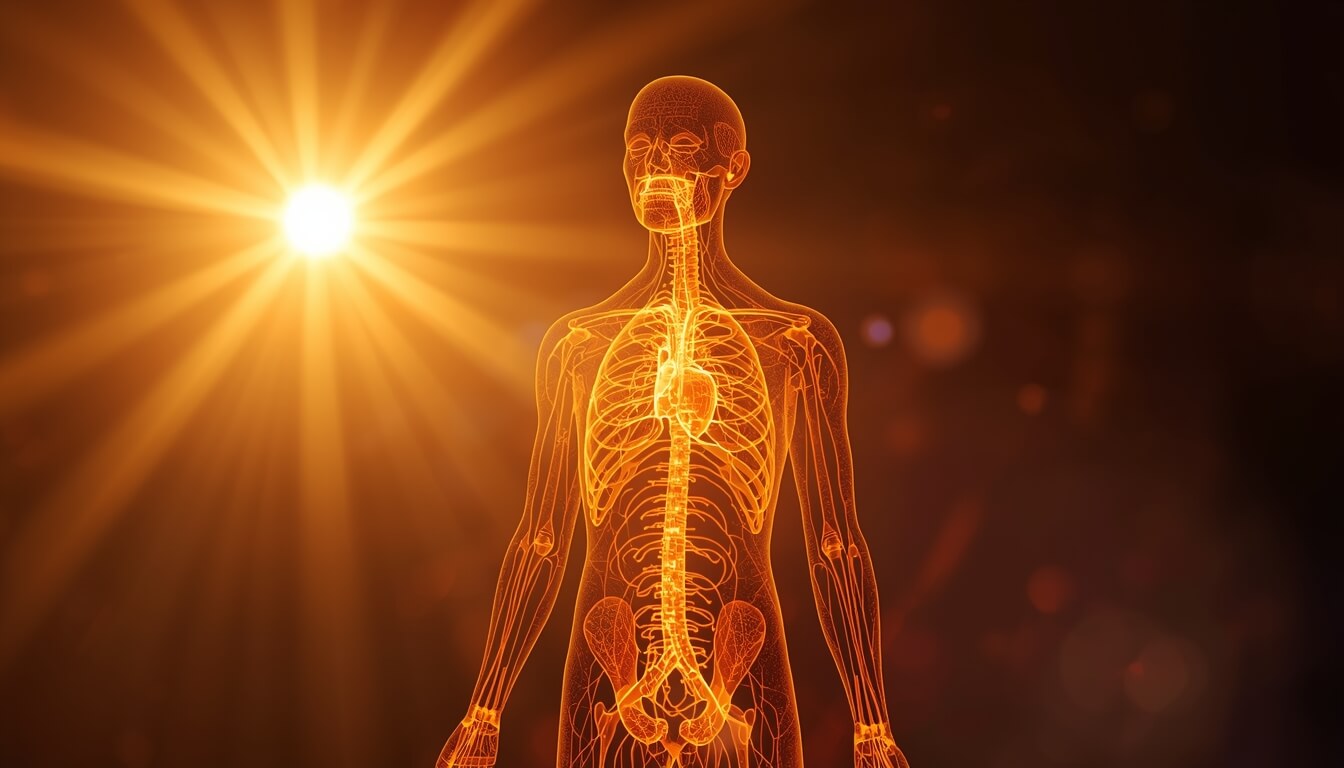







Most of us spend the vast majority of our days indoors under artificial lighting — at work, in cars, at home, and on screens. Emerging research shows that this modern lighting environment isn’t just an aesthetic problem — it’s a metabolic problem.
The main source of natural light on Earth is the Sun, and the light emitted by the Sun includes the visible spectrum.
A new controlled study published in Cell Metabolism shows something both simple and profound: exposure to natural daylight can significantly influence how the body regulates blood sugar and overall metabolism.
In the study, researchers from the University of Geneva, looked at how natural light — compared to artificial light — affected people with type 2 diabetes. Participants exposed to natural daylight (visible light spans the visible spectrum, usually defined as wavelengths of 400–700 nanometres (nm)) spent more hours each day with blood glucose within a normal range and experienced less fluctuation in their glucose levels.
Even over a short exposure period, the differences were clear. Natural light not only helped stabilize blood sugar, but it also:
improved fat oxidation
supported higher evening melatonin levels (benefiting sleep)
enhanced coordination between the brain’s internal clock and the clocks of key organs like the liver and muscles —all of which are foundational to metabolism and long-term metabolic resilience.
Why Light Matters for Metabolism
To understand why light has this effect, we have to talk about the circadian rhythm — the body’s internal clock that coordinates nearly every hormonal and metabolic process over a 24-hour cycle.
Natural sunlight provides strong signals that help synchronize this clock. When your body is aligned with the day-night cycle:
insulin sensitivity improves
energy utilization becomes more efficient
fat burning increases
appetite regulation becomes stronger
sleep quality improves
Disrupted or weak circadian signaling, by contrast, is linked to:
insulin resistance
fat storage
metabolic disease
poor sleep
all of which compromise metabolic health over time.
Understanding the Electromagnetic Spectrum
When we discuss the influence of natural light, we’re talking about a powerful yet precise segment of the electromagnetic spectrum — a vast range of electromagnetic radiation that may help encompass everything from gamma rays and X-rays to ultraviolet light, visible light, infrared, and radio waves. Of all these wavelengths, it’s the visible spectrum — the band of light our human eye can detect, spanning from deep red to violet — that may play a starring role in human metabolism and overall wellness.
Natural light, or white light, represents a complete blend of all colors in the visible spectrum. This visible light may not only allow us to perceive the world in vibrant colors but also serve as a crucial biological signal that may help regulate everything from our circadian rhythms to the way our cells produce energy. When light reaches our skin and eyes, it may act as a metabolic catalyst — supporting the body’s natural rhythms and energy production pathways.
But the influence extends far beyond what we can see. Ultraviolet light, positioned just beyond the visible band, may also support critical metabolic pathways — potentially helping to trigger vitamin D production and supporting amino acid metabolism along with the breakdown of complex molecules into free fatty acids and amino acids. These smaller molecular units may then be utilized by the body to produce energy, repair cellular structures, and support countless biochemical reactions that may help keep us vibrant and thriving.
The fundamental properties of light may be the very reason light can interact with cellular structures, visual receptors, and metabolic enzymes. For instance, the human eye may be precisely calibrated to detect visible radiation, potentially allowing us to sense changes in light intensity and color, which in turn may help synchronize our internal clocks and support our basal metabolic rate.
Light’s influence on metabolism may extend even deeper into our physiology. The pentose phosphate pathway — a crucial metabolic route for generating free energy from glucose — may be highly responsive to natural light exposure. In many organisms, exposure to natural light may help enhance the efficiency of this pathway, potentially supporting the production of metabolic energy and the release of energy from stored nutrients like fatty acids.
Pioneering studies in molecular biology have revealed that electromagnetic radiation, including both visible light and ultraviolet light, may help trigger proteolytic and lipolytic responses — potentially breaking down proteins and fats into smaller molecules that the body can utilize for energy production. This may be why living organisms, from plants to humans, have evolved sophisticated mechanisms to harness the energy released by light waves and light rays, using this energy to drive essential metabolic processes.
Modern technological advances, such as laser light therapy, now leverage specific wavelengths of light that may help promote healing, reduce inflammation, and support metabolic repair — demonstrating just how powerful the right spectrum of light may be for supporting human metabolism and cellular function.
In essence, the electromagnetic spectrum — and especially the visible portion that natural light provides — may be fundamental to the body’s ability to regulate metabolism, produce energy, and maintain optimal health. By understanding the properties of light and how it may interact with our cellular systems, we gain valuable insight into metabolism and may unlock new strategies for optimizing energy, weight, and well-being — potentially extending far beyond what traditional diet and exercise approaches alone can achieve.
Light, Circadian Rhythms & Hormones
The circadian system doesn’t just influence blood sugar — it affects:
thyroid hormone activation
cortisol rhythms
growth hormone release
melatonin production
immune system timing
These systems are all interdependent. When light exposure is limited, circadian misalignment unfolds like a ripple effect — slowing metabolism, raising inflammation, and weakening detox pathways.
One reason natural light may have a metabolic benefit is that it helps the brain and peripheral tissues “tell time” more accurately. This improves communication between:
the central clock in the brain
the liver
skeletal muscle
adipose tissue
Better communication means genes that regulate metabolism can function on schedule — and cells burn fuel more efficiently instead of storing it unnecessarily.
What Happens When We Lose Natural Light Exposure
Modern life has quietly severed our biological relationship with sunlight — and the consequences show up everywhere: energy, weight, hormones, mood, sleep, and immune resilience.
Human physiology evolved outdoors. For thousands of years, light exposure followed a predictable rhythm: bright, full-spectrum light in the morning and daytime… darkness at night. That rhythm programmed metabolism, hormone release, digestion, detoxification, and cellular repair.
Today, that signal is distorted.
Artificial lighting lacks the full spectrum of natural sunlight — particularly the blue, red, and near-infrared wavelengths that communicate directly with the brain, mitochondria, and endocrine system. At the same time, screens and overhead lighting at night send the wrong message entirely, suppressing melatonin and confusing the nervous system into thinking it’s still daytime.
Indoor living compounds the problem. Glass filters critical wavelengths. Sitting under static light all day removes the natural rise and fall of intensity that tells the body where it is in time. Notably, exposure to light at high intensities can lead to retinal degeneration in albino rodents, highlighting the potential risks of artificial lighting environments.
The result isn’t failure. It’s miscommunication.
When circadian signals are blunted or reversed, the body enters a protective, energy-conserving state. Light also interacts with matter through reflection, refraction, and diffraction, which can influence how light is perceived and utilized by the body.
Over time, this leads to:
• Sluggish thyroid signalingThe thyroid relies on circadian cues to regulate metabolic output. Without proper light input, thyroid hormone signaling becomes muted — even when labs look “normal.”
• Poor mitochondrial outputMitochondria respond directly to light signals. When those signals are weak or mistimed, ATP production drops and cells shift into low-energy mode.
• Increased insulin resistanceDisrupted circadian rhythm impairs glucose handling. The body becomes less efficient at using fuel, favoring storage over burning.
• Elevated inflammationLight disruption increases stress signaling, cortisol imbalance, and inflammatory cytokines — all of which suppress metabolism and immune clarity.
• Disrupted sleep architectureMelatonin is released based on light exposure earlier in the day. Poor daylight input leads to poor nighttime repair, shallow sleep, and incomplete recovery.
• Weight gain that feels “unexplained”When the body doesn’t know what time it is, it doesn’t know when to burn fuel. Fat storage becomes a safety mechanism, not a dietary failure. However, in some contexts, exposure to light has been associated with increased weight loss, such as in studies of biological decay in wood blocks near light sources.
The body isn’t broken. It’s confused.
Light Sets the Rhythm — But the Body Still Needs the Tools
Here’s the part most people miss: this isn’t the whole story
Light tells the body when to burn fuel.
Nutrients determine how well it can respond.
Light is a signal — not a solution by itself. The ultimate goal is efficient energy production, which depends on both the light signaling and the body’s metabolic capacity.
You can step outside every morning, do everything “right,” and still feel stuck if the internal machinery can’t respond to that signal.
This is where metabolic repair becomes essential.
If iodine receptors are blocked by fluoride and bromide, thyroid signals don’t convert into energy. If mitochondria are weak, light can’t translate into ATP. If the liver is congested, hormones and metabolic byproducts back up instead of clearing. If detox pathways are overwhelmed, inflammation overrides fat-burning signals.
In those cases, the message from light arrives — but it doesn’t land.
That’s why pairing natural light exposure with targeted metabolic support is so powerful.
Light restores timing. Metabolic support restores capacity. Light can be described using both classical wave theory and quantum theory, depending on the context, which helps explain its diverse effects on biological systems.
Together, they allow the body to move out of conservation mode and back into regulation — where energy rises, inflammation quiets, hormones rebalance, and fat loss becomes a natural byproduct instead of a fight.
How the 14-Day Metabolic Reset Works With Light to Restore Metabolism
Natural light sets the rhythm — but nutrients and cellular support determine how well the body can respond to that signal.
This is where the 14-Day Metabolic Reset becomes so powerful. It’s designed to work synergistically with circadian light exposure to re-ignite metabolism, improve fat burning, and restore cellular energy — not by forcing the body, but by restoring the systems that light is trying to regulate. The metabolic reset supports catabolic reactions, which are essential for breaking down nutrients and releasing energy at the cellular level.
Light tells the body when to burn fuel. These tools determine how efficiently that fuel is burned.
When discussing light-based therapies or interventions, it’s important to note that lasers are commonly used in many systems because they have a pure wavelength and can stay as a narrow beam over a long distance.
Acceleradine® Iodine — Turning Light Signals Into Metabolic Energy
Light exposure communicates with the brain’s master clock, which then signals the thyroid. But without adequate iodine, that signal goes nowhere.
Supports cellular membrane health
Support thyroid hormone production and receptor sensitivity
Increase mitochondrial ATP output
Enhance fat oxidation and metabolic heat
Improve immune and detox signaling
The metabolism of amino acids, essential for thyroid hormone production, involves the transfer of the amino group through transamination and deamination reactions. During this process, ammonia is produced, and the urea cycle plays a crucial role in detoxifying this ammonia to maintain metabolic balance.
When morning light stimulates the hypothalamus and pituitary, iodine ensures the thyroid can respond. Without iodine sufficiency, circadian cues fail to translate into metabolic action.
This is one of the most overlooked reasons people get sunlight yet still struggle with low energy, weight gain, and cold intolerance.
Accelerated Thyroid® — Translating Circadian Rhythm Into Fat Burning
Light sets the rhythm, but the thyroid sets the pace.
Accelerated Thyroid® supports the thyroid–liver–adrenal axis, helping the body properly convert and utilize thyroid hormones that are triggered by circadian alignment.
It may help:
Improve T4 → T3 conversion
Increase resting metabolic rate
Enhance energy availability for movement and exercise
Reduce fatigue and metabolic sluggishness
Support hormonal balance
When paired with consistent morning daylight exposure, thyroid signaling becomes clearer, stronger, and more responsive — allowing metabolism to rise naturally instead of being forced through stimulants or restriction.
Accelerated Fast™ — Teaching the Body to Burn Fat in Daylight Hours
Light exposure during the day naturally favors fat burning — if the body has metabolic flexibility. The body breaks down macronutrients like carbohydrates, fats, and proteins through catabolic processes to provide energy. Individuals with a fast metabolism burn more calories at rest, while those with a slow metabolism burn fewer calories, which affects how many calories are needed for weight maintenance.
The ingredients in Accelerated Fast™may help restore that flexibility by:
Improving mitochondrial fat oxidation
Stabilizing blood sugar and hunger hormones
Supporting ketosis without a high-fat diet
Targeting visceral and liver fat
Enhancing energy during fasting windows
This is why people often notice better results when fasting and getting morning sunlight. Light cues the body that it’s daytime — Accelerated Fast™ may give the mitochondria the tools to use stored fat as fuel instead of crashing energy. Consuming more calories than you burn leads to weight gain, while burning more calories than you consume results in weight loss.
Accelerated Methylene Blue® — Amplifying Cellular Energy From Light
Light doesn’t just affect hormones — it affects mitochondria directly.
Methylene Blue may support:
Electron transport chain efficiency
ATP production inside mitochondria
Oxygen utilization in cells
Reduced oxidative stress
Brain and nervous system energy
During ATP production in mitochondria, hydrogen atoms play a key role in electron transfer and energy production, while carbon dioxide is produced as a byproduct of cellular respiration. Significant amounts of energy are released during these metabolic processes, fueling cellular function.
When circadian rhythm is aligned through daylight exposure, mitochondrial energy demand increases. Methylene Blue helps cells meet that demand efficiently — translating light signals into real, usable energy rather than fatigue.
This is one reason people report sharper focus, cleaner energy, and better endurance when combining morning light exposure with mitochondrial support.
Why This Combination Works So Well
Natural light sets the timing. The 14-Day Metabolic Reset restores the machinery.
Together, they help:
Re-establish circadian rhythm
Improve thyroid signaling
Increase ATP and mitochondrial efficiency
Enhance fat burning during daylight hours
Reduce metabolic resistance
Restore clean, sustained energy
During metabolism, nutrients are broken down into simple molecules, which are then used for energy production and storage. Glycogen synthase plays a key role in assembling glycogen from glucose, allowing the body to store energy efficiently in the liver and skeletal muscle.
Light itself has a dual nature, behaving both as a wave and as a particle—a fact revealed by quantum mechanics. The analysis of the frequencies of light emitted and absorbed by atoms was a principal impetus for the development of quantum mechanics.
This isn’t about hacking metabolism — it’s about re-synchronizing it.
When light exposure and metabolic support work together, the body remembers how to regulate weight, energy, and blood sugar on its own.
The Bottom Line
Metabolism is not just about food. It’s not just about exercise. And it’s definitely not about punishment.
It’s about timing, signaling, and cellular capacity.
When light exposure and metabolic support work together, the body remembers how to regulate energy, weight, and blood sugar naturally.
Sometimes the most powerful reset isn’t doing more — it’s giving the body the right signals again.

Sara Banta
Sara Banta is an NANP Certified Dietary Supplement Professional, Health Coach, and CEO & Founder of Accelerated Health Products. She is also the host of the top-rated podcast Accelerated Health with Sara Banta, where she shares practical strategies to support energy, metabolism, hormones, and overall wellness. Sara is passionate about helping people take control of their health naturally through education and innovative formulations.
- Sara Banta
- Sara Banta
- Sara Banta
- Sara Banta
- Sara Banta
- Sara Banta
- Sara Banta
- Sara Banta
- Sara Banta
- Sara Banta
- Sara Banta
- Sara Banta
- Sara Banta
- Sara Banta
- Sara Banta
- Sara Banta
- Sara Banta
- Sara Banta
- Sara Banta
- Sara Banta
- Sara Banta
- Sara Banta
- Sara Banta
- Sara Banta
- Sara Banta
- Sara Banta
- Sara Banta
- Sara Banta
- Sara Banta
- Sara Banta
- Sara Banta
- Sara Banta
- Sara Banta
- Sara Banta
- Sara Banta
- Sara Banta
- Sara Banta
- Sara Banta
- Sara Banta
- Sara Banta
- Sara Banta
- Sara Banta
- Sara Banta
- Sara Banta
- Sara Banta
- Sara Banta
- Sara Banta
- Sara Banta
- Sara Banta
- Sara Banta
- Sara Banta
- Sara Banta
- Sara Banta
- Sara Banta
- Sara Banta
- Sara Banta
- Sara Banta
- Sara Banta
- Sara Banta
- Sara Banta
- Sara Banta
- Sara Banta
- Sara Banta
- Sara Banta
- Sara Banta
- Sara Banta
- Sara Banta
- Sara Banta
- Sara Banta
- Sara Banta
- Sara Banta
- Sara Banta
- Sara Banta
- Sara Banta
- Sara Banta
- Sara Banta
- Sara Banta
- Sara Banta
- Sara Banta
- Sara Banta
- Sara Banta
- Sara Banta
- Sara Banta
- Sara Banta
- Sara Banta
- Sara Banta
- Sara Banta
- Sara Banta
- Sara Banta
- Sara Banta
- Sara Banta
- Sara Banta
- Sara Banta
- Sara Banta
- Sara Banta
- Sara Banta
- Sara Banta
- Sara Banta
- Sara Banta
- Sara Banta
- Sara Banta
- Sara Banta
- Sara Banta
- Sara Banta
- Sara Banta
- Sara Banta
- Sara Banta
- Sara Banta
- Sara Banta
- Sara Banta
- Sara Banta
- Sara Banta
- Sara Banta
- Sara Banta
- Sara Banta
- Sara Banta
- Sara Banta
- Sara Banta
- Sara Banta
- Sara Banta
- Sara Banta
- Sara Banta
- Sara Banta
- Sara Banta
- Sara Banta
- Sara Banta
- Sara Banta
- Sara Banta
- Sara Banta
- Sara Banta
- Sara Banta
- Sara Banta
- Sara Banta
- Sara Banta
- Sara Banta
- Sara Banta
- Sara Banta
- Sara Banta
- Sara Banta
- Sara Banta
- Sara Banta
- Sara Banta
- Sara Banta
- Sara Banta
- Sara Banta
- Sara Banta
- Sara Banta
- Sara Banta
- Sara Banta
- Sara Banta
- Sara Banta
- Sara Banta
- Sara Banta
- Sara Banta
- Sara Banta
- Sara Banta
- Sara Banta
- Sara Banta
- Sara Banta
- Sara Banta
- Sara Banta
- Sara Banta
- Sara Banta
- Sara Banta
- Sara Banta
- Sara Banta
- Sara Banta
- Sara Banta
- Sara Banta
- Sara Banta
- Sara Banta
- Sara Banta
- Sara Banta
- Sara Banta
- Sara Banta
- Sara Banta
- Sara Banta
- Sara Banta
- Sara Banta
- Sara Banta
- Sara Banta
- Sara Banta
- Sara Banta
- Sara Banta
- Sara Banta
- Sara Banta
- Sara Banta
- Sara Banta
- Sara Banta
- Sara Banta
- Sara Banta
- Sara Banta
- Sara Banta
- Sara Banta
- Sara Banta
- Sara Banta
- Sara Banta
- Sara Banta
- Sara Banta
- Sara Banta
- Sara Banta
- Sara Banta
- Sara Banta
- Sara Banta
- Sara Banta
- Sara Banta
- Sara Banta
- Sara Banta
- Sara Banta
- Sara Banta
- Sara Banta
- Sara Banta
- Sara Banta
- Sara Banta
- Sara Banta
- Sara Banta
- Sara Banta
- Sara Banta
- Sara Banta
- Sara Banta
- Sara Banta