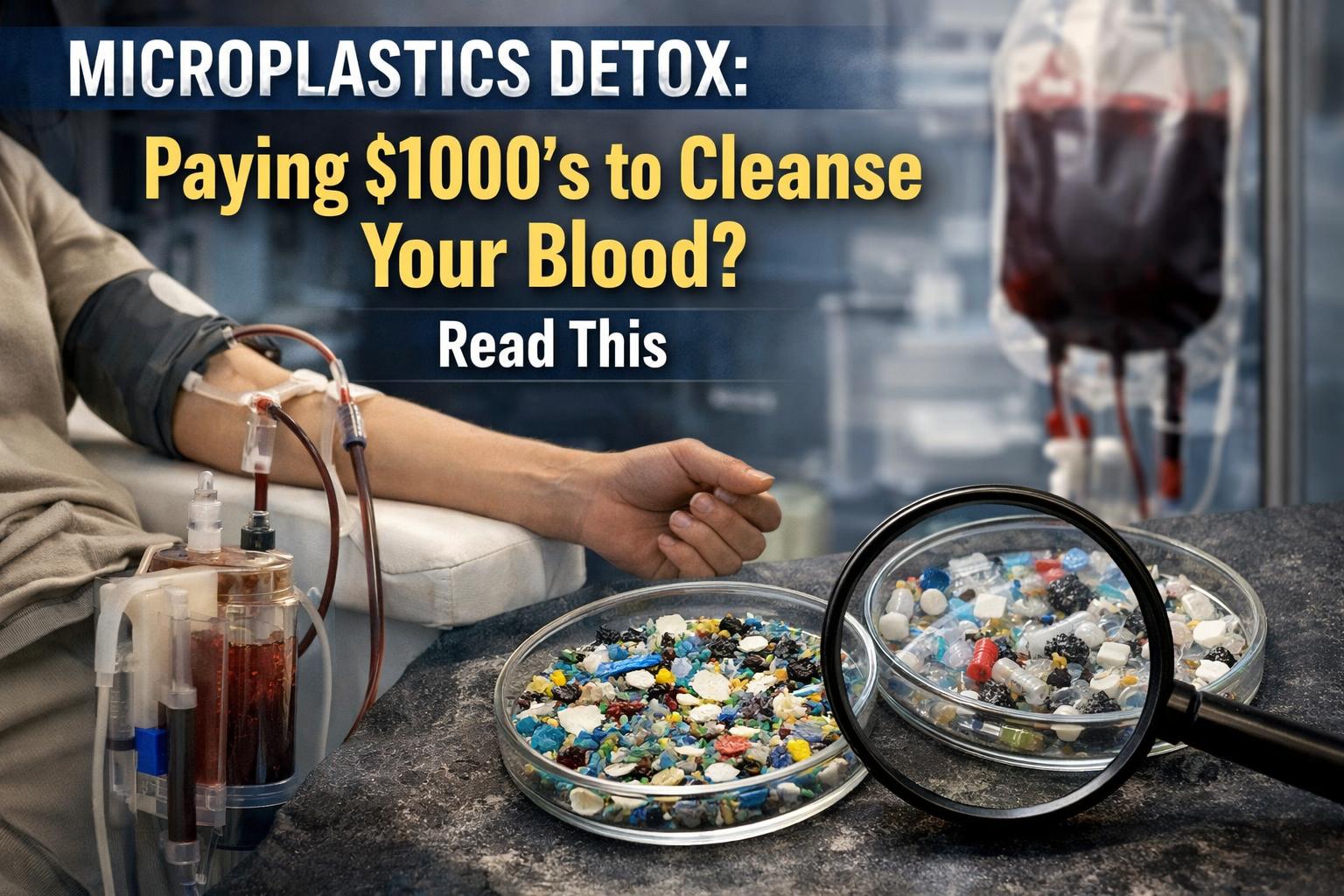
A growing number of high-profile celebrities have recently turned to plasmapheresis—an invasive blood-filtering procedure that can cost upwards of $10,000 per session—in an attempt to “clean” their blood of microplastics, forever chemicals, and environmental toxins. Images of Orlando Bloom in a clinic chair, Troy Aikman with IVs in both arms, and Bryan Johnson publicly showcasing his treatments have helped drive this trend into mainstream visibility. The marketing message is compelling: remove your plasma, filter out the bad substances, replace it with albumin, and walk away with cleaner blood and a lighter, clearer body.
When you look past the celebrity endorsements and clinic branding, the promised benefits do not match the science. There is currently no clinical evidence demonstrating that plasmapheresis can remove microplastics or the vast majority of environmental toxins found in human blood. These substances bind to fat, cell membranes, lymphatic fluid, bile, and connective tissue—not just plasma—making them difficult, if not impossible, to remove through a single filtration pass. Plastic pollution is a major contributor to the presence of microplastics in the environment.
More concerning is the fact that early reports suggest the very machines used in the procedure may introduce additional microplastics into the bloodstream. The tubing and equipment are made from medical-grade plastics, and micro-abrasion during filtration can release particles directly into circulation.
In other words, individuals paying $10,000 for detoxification may be adding more microscopic plastic particles into their bodies in the process.
Microplastics and toxins can enter the body through various pathways, including ingestion, inhalation, and absorption, resulting in human exposure to these contaminants. Even setting that aside, the “results” remain underwhelming. Many participants admit that they feel little to no difference afterward. At best, any positive effects appear temporary—likely due to fluid shifts, electrolyte changes, or placebo rather than meaningful detoxification. And while the procedure may provide relief to certain medical patients in clinical settings, its application as a longevity or detox treatment for healthy individuals lacks substantial support.
The irony is that the human body already has an extraordinarily advanced detoxification system built in. The liver, thyroid, gut, bile ducts, kidneys, lymphatic network, and cell membranes work together around the clock to process chemical exposures, filter out toxins, metabolize waste, and maintain internal balance. These organs remove toxins and process waste products such as urea and carbon dioxide, ensuring that harmful substances are efficiently eliminated from the body. When these systems become sluggish—from nutritional deficiencies, halogen exposure, endocrine disruptors, chronic stress, or poor liver function—the body does not need a machine. It needs support.
When these natural detox organs are nourished and functioning well, detoxification becomes an effortless, ongoing process—not something outsourced to a machine a few times per year. And unlike plasmapheresis, which only addresses plasma and not the deeper tissues where toxins actually accumulate, the right supplements and minerals can help support the entire metabolic network responsible for toxin removal.
The solutions below offer clinically aligned, non-invasive, physiologically intelligent alternatives that may support real detoxification, liver and thyroid health, hormone balance, toxin elimination, and cellular repair. They do so at a fraction of the cost of celebrity blood-filtering—without the risks, side effects, or questionable scientific basis.
Sources of Microplastics
Microplastics are everywhere—and their journey into our bodies and environment may help illuminate the critical pathways through which everyday plastic products we use and discard contribute to widespread contamination. One of the main sources may be larger plastic debris, such as plastic bottles, bags, and packaging, which may gradually break down into smaller particles through exposure to sunlight, water, and physical abrasion. As these plastics degrade, they may shed microplastic particles that can persist in the environment for decades — creating opportunities for targeted intervention and clean remediation strategies.
Synthetic fibers, like those found in polyvinyl chloride (PVC) and other polymers, may represent another major pathway for contamination. These fibers may be present in countless plastic products, from clothing to artificial turf. Every time we wash synthetic fabrics in washing machines, tiny microplastic fibers may be released into wastewater — highlighting the potential for precision filtration technologies to support cleaner water systems. Unfortunately, even advanced sewage treatment plants and wastewater treatment plants may not be fully equipped to filter out these microscopic particles. As a result, microplastics may escape into surface waters, eventually reaching rivers, lakes, and oceans — creating opportunities for enhanced filtration systems that may help support aquatic ecosystem health.
Marine pollution from microplastics may represent a growing opportunity to support marine organisms and entire aquatic ecosystems through targeted intervention strategies. Lost fishing gear—such as nets and lines—may break down into microplastic debris, potentially harming marine life and contaminating the food chain. Studies may have found microplastic particles in fish species, sea salts, and even sediment samples from the ocean floor, highlighting the widespread impact on marine environments and the potential for these particles to move up the food chain — creating opportunities for biomonitoring systems that may help support both environmental and human health.
But the opportunity for intervention doesn’t stop at the ocean. Microplastics may also be found in soil ecosystems, where artificial turf and other plastic products may shed synthetic fibers that can be ingested by animals and enter agricultural systems. Tea bags made from plastic materials and bottled water may represent additional, often overlooked, sources of microplastic contamination that could benefit from clean alternatives. In fact, research may have shown that a staggering 83% of global tap water samples contain microplastic particles, and bottled water may not be immune—plastic bottles themselves may leach microplastics into the water we drink, creating opportunities for precision water treatment that may help support optimal hydration.
The production of plastics may continue to fuel this cycle — yet this also represents an opportunity for sustainable manufacturing innovations. With billions of plastics produced each year for packaging, textiles, and consumer goods, the potential for microplastic reduction strategies may only grow. As plastic waste accumulates and degrades, it may release even more microplastic particles into the environment, making comprehensive waste management systems increasingly essential for supporting environmental health and eliminating these contaminants from our surroundings and our bodies.
The potential impact of microplastics on human health may represent an area of active research with concerning early findings — yet this also creates opportunities for cellular support strategies. Microplastics may enter the human body through ingestion, inhalation, or even skin contact. Once inside, they may potentially cause inflammation, oxidative stress, and potentially disrupt the circulatory system and other vital biological processes. Persistent organic pollutants, toxic metals, and other harmful substances may also hitch a ride on microplastic particles, compounding their potential effects — highlighting the need for comprehensive detoxification support that may help optimize cellular resilience.
Ultimately, microplastic pollution may represent a complex, global opportunity that affects not just marine ecosystems and aquatic life, but also the health of human society as a whole. Reducing plastic production, improving waste management systems, and making conscious choices to limit plastic use may represent essential steps toward environmental optimization and protecting both ecosystem integrity and human health. Precision environmental strategies, coupled with clean technology innovations, may help support a transition toward sustainable materials that optimize both planetary and personal wellness for generations to come.
The Accelerated Microplastics Detox Cleanse: A More Effective Way to Detox from Microplastic Pollution
Microplastics and environmental chemicals cannot be removed through quick fixes or one-time procedures. The Accelerated Microplastics Detox Cleanse focuses on strengthening the liver, thyroid, gut, cell membranes, and mineral pathways—the systems that drive real, continuous detoxification. Supporting these detoxification systems not only promotes overall health but also aids in disease control by reducing the burden of harmful substances on the body.
Acceleradine® Iodine
May Support Halogen Detox, Thyroid Activation, and Cellular Energy
Iodine is essential for thyroid hormone production, mitochondrial health, and detoxification. Toxic halogens such as fluoride, bromine, and chlorine compete with iodine and may accumulate in tissue, often hitching a ride on microplastics.
Supporting the body with pure, bioavailable iodine may help:
Displace halogens at receptor sites
Promote healthy thyroid hormone production
Enhance mitochondrial energy and metabolic temperature
Support lymphatic movement and cellular oxygenation
Improve detox capacity at the cellular level
Instead of a $10,000 session that filters plasma once, Acceleradine iodine may help the body maintain continuous detoxification through proper thyroid and metabolic function.
Accelerated Liver Care®
May Help Promote Bile Flow, Liver Repair, and Hormonal Balance
The liver filters the entire blood supply every few minutes—something plasmapheresis cannot replicate. When the liver becomes congested, toxins may be rerouted into fat tissue or recirculated through the bloodstream.
This formula contains botanicals traditionally used to support liver health, increase bile flow, and promote detoxification. It may help:
Improve Phase I, II, and III detox pathways
Reduce inflammation within the liver
Support healthy estrogen metabolism
Promote bile flow, the body’s primary toxin-removal route
Improve digestion and reduce toxin recirculation
When the liver is supported properly, daily detox becomes more efficient and sustainable than any external filtration therapy.
Accelerated Cellular Detox Powder™
May Support Microplastic Binding and Eliminating Toxins at the Gut Level
Up to 80 percent of daily toxins enter through the digestive tract. Supporting detoxification at the gut level may prevent toxins from entering the bloodstream in the first place.
This powder blends micronized zeolite, diatomaceous earth, vegan chitosan, activated charcoal, slippery elm, and Triphala. Together, they may help:
Bind microplastics, heavy metals, and environmental chemicals
Capture toxins before they reach systemic circulation
Support gut integrity and reduce inflammatory load
Promote daily elimination of harmful compounds
Rather than filtering the blood after toxin exposure, this approach may stop toxins at their entry point.
BodyBio PC (Phosphatidylcholine)
May Support Cellular Membrane Repair and Detoxification
Toxins—including microplastics—accumulate in cell membranes, disrupting hormone signaling, mitochondrial activity, and detox pathways. Plasmapheresis does not repair membrane damage.
Phosphatidylcholine is the primary lipid used to rebuild and restore membranes. It may help support:
Healthy cell membrane structure
Improved mitochondrial energy production
Enhanced toxin release from within cells
Cognitive performance and neurological health
Liver function and bile composition
Repairing cell membranes is foundational for detox, and it is something external filtration cannot address.
Accelerated Ancient Salt™
May Support Mineral Balance, Hydration, and Metabolic Function
Minerals are essential for bile production, stomach acid, hydration, nerve signaling, and detoxification. Many salts contain microplastics, but this formula provides clean, mineral-rich support for foundational physiology.
It may help:
Improve digestion and stomach acid levels
Support thyroid hormone uptake when paired with iodine
Promote bile flow and adrenal balance
Enhance hydration and electrolyte stability
Provide trace minerals essential for detoxification
Supporting mineral status helps fuel the body’s natural detox pathways rather than depending on an occasional filtration procedure.
A Practical Cost Comparison
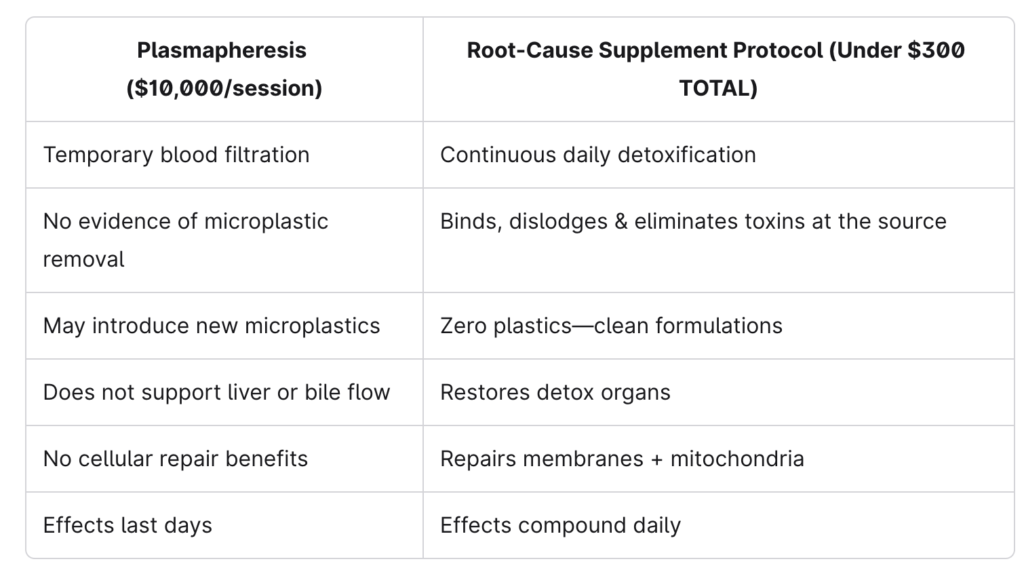
A single plasmapheresis session costs between $10,000 and $12,000, with clinics recommending two or more sessions per year. Despite that cost, the benefits remain unproven and may not reach stored toxins in fat, organs, or cell membranes.
In contrast, a full year of targeted, root-cause support using Acceleradine® Iodine, Accelerated Liver Care®, Accelerated Cellular Detox Powder™, BodyBio PC, and Accelerated Ancient Salt™ costs a fraction of that and may support continuous detoxification instead of temporary filtration.
Why These Solutions Work, While $10,000 Blood Plasma Plasmapheresis Does Not
Final Thoughts on Microplastics and Human Health
Microplastics and environmental toxins are real concerns, and it makes sense that people want solutions. People are now exposed to large quantities of microplastics and environmental toxins from sources like food packaging, tire wear, and shipping waste, which reinforces the need for continuous support of detoxification systems. But detoxification cannot be outsourced to a machine twice a year—not when the body already has powerful systems for removing toxins, repairing cells, and maintaining metabolic balance.
Supporting the systems that run detoxification daily—the liver, thyroid, gut, bile, cell membranes, and mineral pathways—may offer far more meaningful and sustainable benefits. The supplements above provide a comprehensive, accessible way to help the body detox naturally, safely, and continually.
Longevity doesn’t come from chasing the newest celebrity cleanse or flying to London for a $12,000 procedure. It comes from supporting your thyroid, liver, gut, cells, mitochondria, and minerals—the real detox systems your body is built upon.
With Acceleradine®, Accelerated Liver Care®, Accelerated Cellular Detox Powder™, BodyBio PC, and Accelerated Ancient Salt™, you’re giving your body the tools it actually needs to clear toxins, repair cells, and feel younger—not for a day, but for life.

Sara Banta
Sara Banta is a Stanford University Graduate with a Degree in Economics and Psychology, and a certified Natural Supplement Expert & Graduate of the Institute for Integrative Nutrition. Sara is the Founder of Accelerated Health Products and host of the health & wellness podcast, Accelerated Health Radio.
- Sara Banta
- Sara Banta
- Sara Banta
- Sara Banta
- Sara Banta
- Sara Banta
- Sara Banta
- Sara Banta
- Sara Banta
- Sara Banta
- Sara Banta
- Sara Banta
- Sara Banta
- Sara Banta
- Sara Banta
- Sara Banta
- Sara Banta
- Sara Banta
- Sara Banta
- Sara Banta
- Sara Banta
- Sara Banta
- Sara Banta
- Sara Banta
- Sara Banta
- Sara Banta
- Sara Banta
- Sara Banta
- Sara Banta
- Sara Banta
- Sara Banta
- Sara Banta
- Sara Banta
- Sara Banta
- Sara Banta
- Sara Banta
- Sara Banta
- Sara Banta
- Sara Banta
- Sara Banta
- Sara Banta
- Sara Banta
- Sara Banta
- Sara Banta
- Sara Banta
- Sara Banta
- Sara Banta
- Sara Banta
- Sara Banta
- Sara Banta
- Sara Banta
- Sara Banta
- Sara Banta
- Sara Banta
- Sara Banta
- Sara Banta
- Sara Banta
- Sara Banta
- Sara Banta
- Sara Banta
- Sara Banta
- Sara Banta
- Sara Banta
- Sara Banta
- Sara Banta
- Sara Banta
- Sara Banta
- Sara Banta
- Sara Banta
- Sara Banta
- Sara Banta
- Sara Banta
- Sara Banta
- Sara Banta
- Sara Banta
- Sara Banta
- Sara Banta
- Sara Banta
- Sara Banta
- Sara Banta
- Sara Banta
- Sara Banta
- Sara Banta
- Sara Banta
- Sara Banta
- Sara Banta
- Sara Banta
- Sara Banta
- Sara Banta
- Sara Banta
- Sara Banta
- Sara Banta
- Sara Banta
- Sara Banta
- Sara Banta
- Sara Banta
- Sara Banta
- Sara Banta
- Sara Banta
- Sara Banta
- Sara Banta
- Sara Banta
- Sara Banta
- Sara Banta
- Sara Banta
- Sara Banta
- Sara Banta
- Sara Banta
- Sara Banta
- Sara Banta
- Sara Banta
- Sara Banta
- Sara Banta
- Sara Banta
- Sara Banta
- Sara Banta
- Sara Banta
- Sara Banta
- Sara Banta
- Sara Banta
- Sara Banta
- Sara Banta
- Sara Banta
- Sara Banta
- Sara Banta
- Sara Banta
- Sara Banta
- Sara Banta
- Sara Banta
- Sara Banta
- Sara Banta
- Sara Banta
- Sara Banta
- Sara Banta
- Sara Banta
- Sara Banta
- Sara Banta
- Sara Banta
- Sara Banta
- Sara Banta
- Sara Banta
- Sara Banta
- Sara Banta
- Sara Banta
- Sara Banta
- Sara Banta
- Sara Banta
- Sara Banta
- Sara Banta
- Sara Banta
- Sara Banta
- Sara Banta
- Sara Banta
- Sara Banta
- Sara Banta
- Sara Banta
- Sara Banta
- Sara Banta
- Sara Banta
- Sara Banta
- Sara Banta
- Sara Banta
- Sara Banta
- Sara Banta
- Sara Banta
- Sara Banta
- Sara Banta
- Sara Banta
- Sara Banta
- Sara Banta
- Sara Banta
- Sara Banta
- Sara Banta
- Sara Banta
- Sara Banta
- Sara Banta
- Sara Banta
- Sara Banta
- Sara Banta
- Sara Banta
- Sara Banta
- Sara Banta
- Sara Banta
- Sara Banta
- Sara Banta
- Sara Banta
- Sara Banta
- Sara Banta
- Sara Banta
- Sara Banta
- Sara Banta
- Sara Banta
- Sara Banta
- Sara Banta
- Sara Banta
- Sara Banta
- Sara Banta
- Sara Banta
- Sara Banta
- Sara Banta
- Sara Banta
- Sara Banta
- Sara Banta
- Sara Banta
- Sara Banta
- Sara Banta
- Sara Banta
- Sara Banta
- Sara Banta
- Sara Banta
- Sara Banta
- Sara Banta
- Sara Banta
- Sara Banta
- Sara Banta
- Sara Banta
- Sara Banta
- Sara Banta
- Sara Banta
- Sara Banta